Between a sea of flowers and quiet open spaces
Here, the Eifel reveals its most unspoiled side: vast heathlands, mysterious bogs, and breathtaking views define these moments in nature. When entire mountain ranges turn purple in late summer and a special stillness settles over the bogs, the landscape becomes an experience for all the senses.
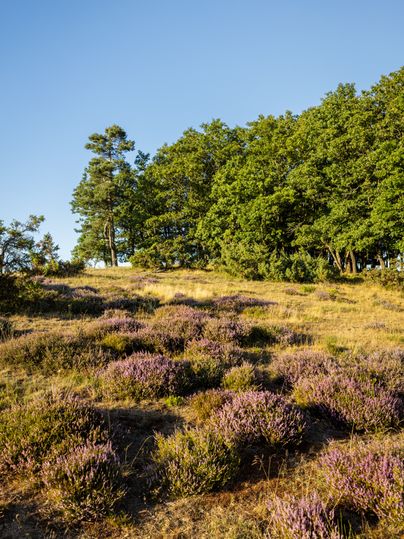
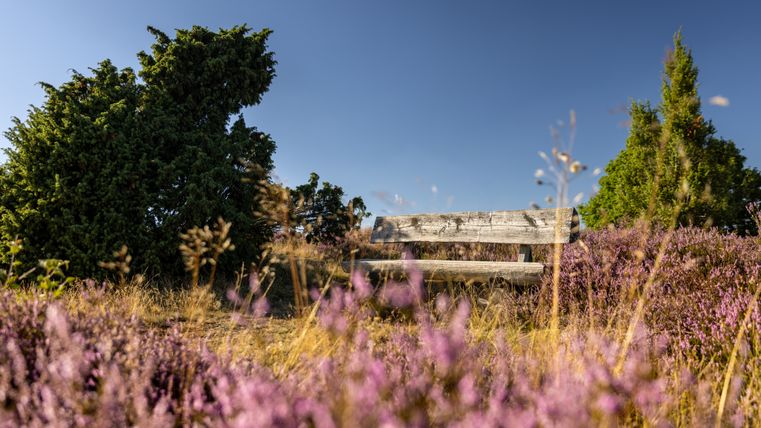
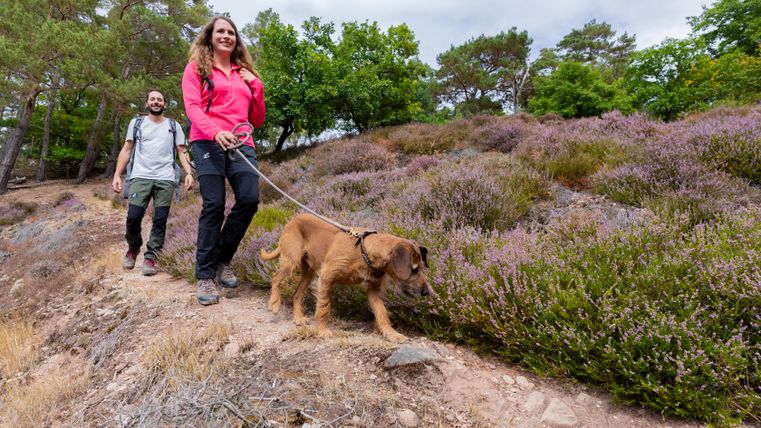
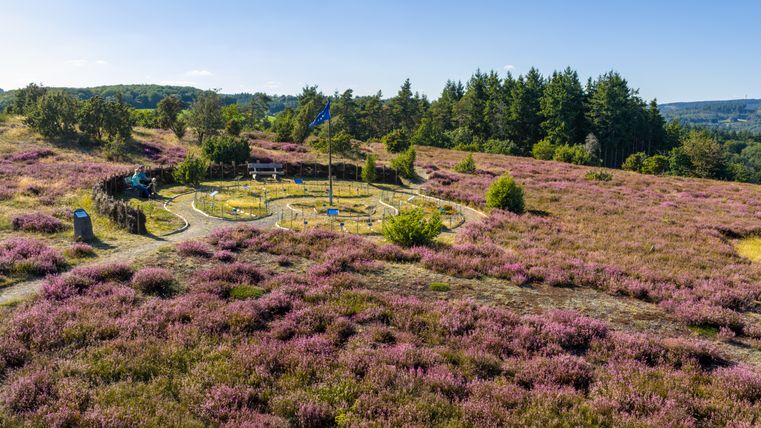
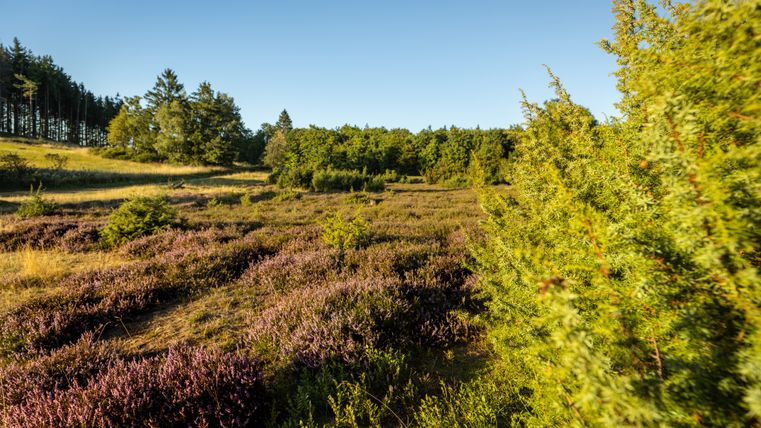
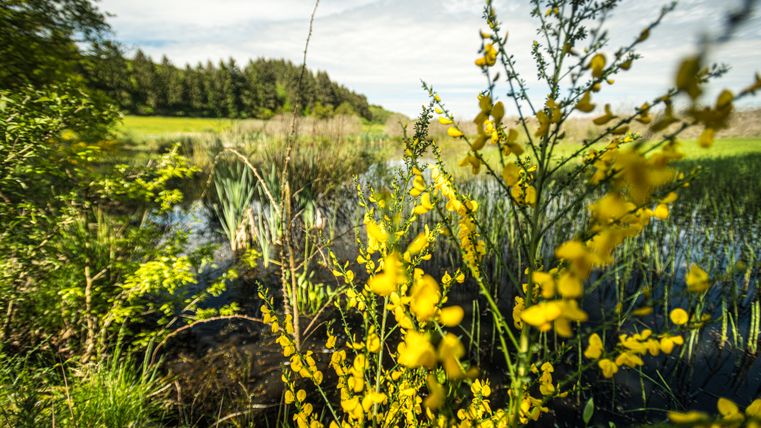
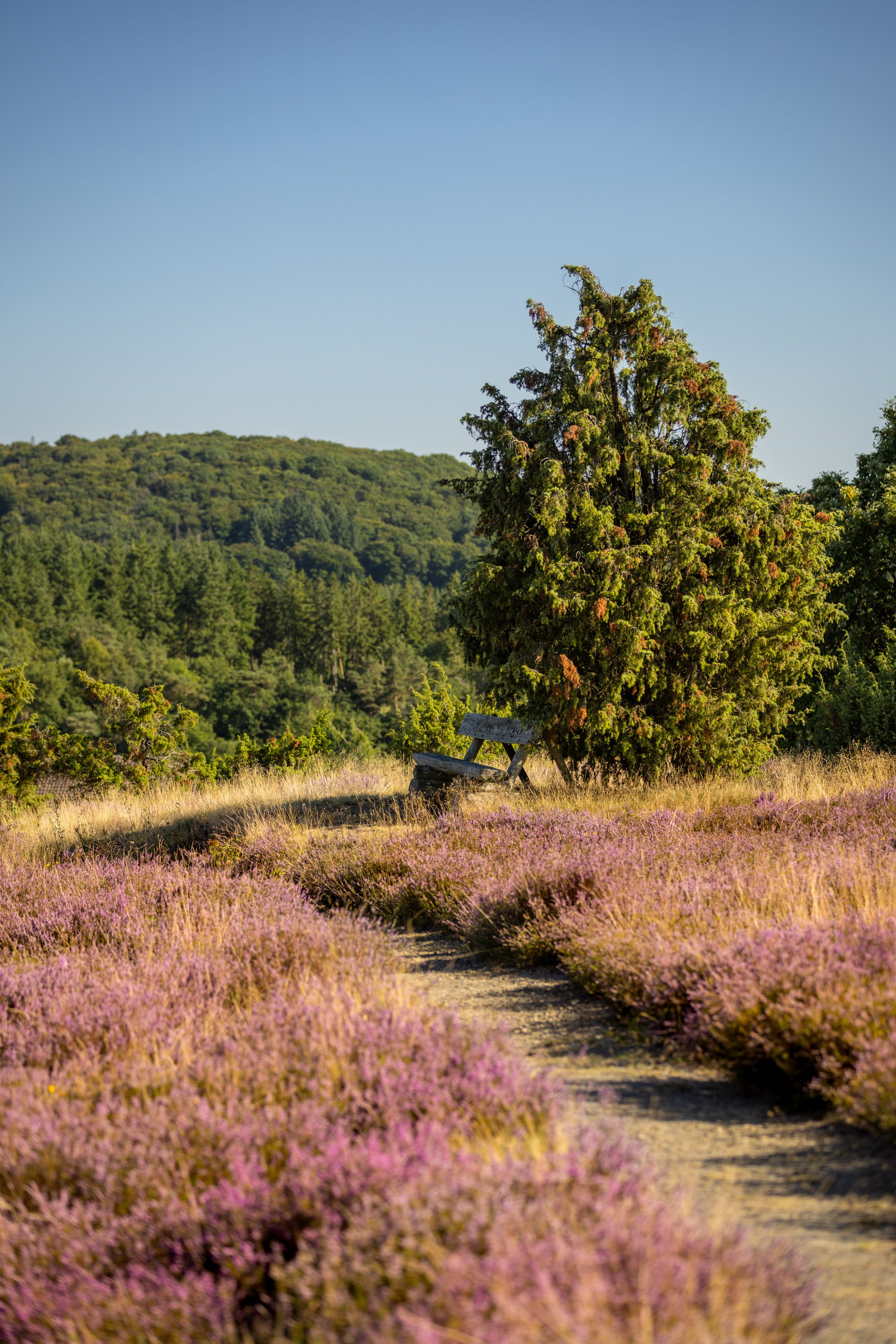
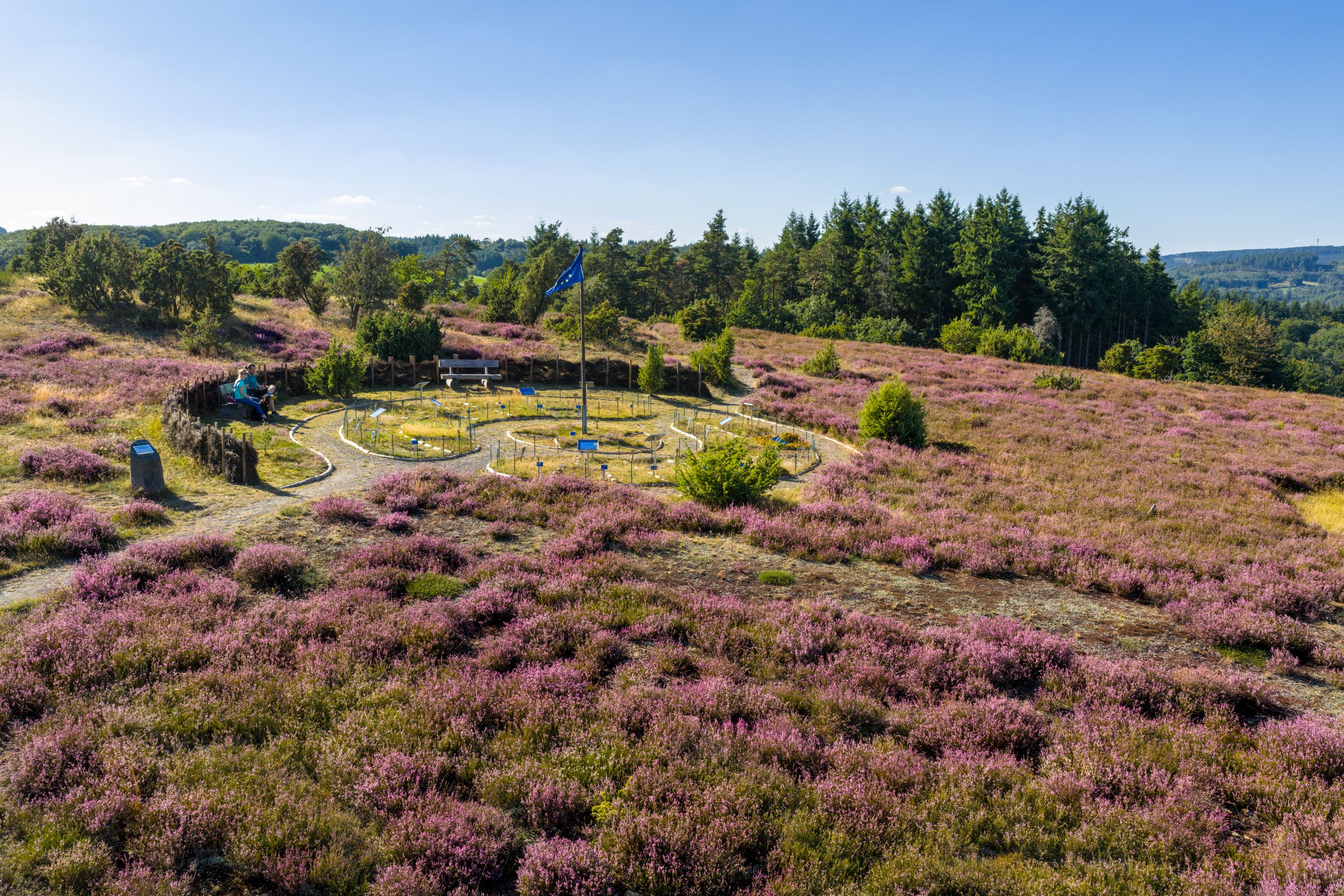
Especially in the Vordereifel, the heathland unfolds its characteristic play of colors—a blend of purple flowers and evergreen juniper—in August and September.
This unique cultural landscape was shaped by the historic “Schiffelwirtschaft” (a traditional farming system) and today provides a habitat for numerous rare animal and plant species.
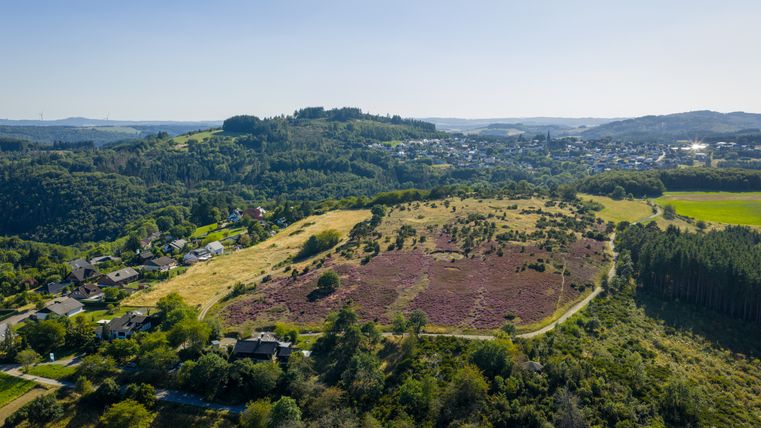
Open areas such as the Drover Heath or the juniper heaths near Langscheid, Arft, and Virneburg are considered impressive examples of this type of landscape.
If you’re paying close attention as you walk, with a little luck you might spot rare butterflies or hear the soft humming and rustling along the trail.
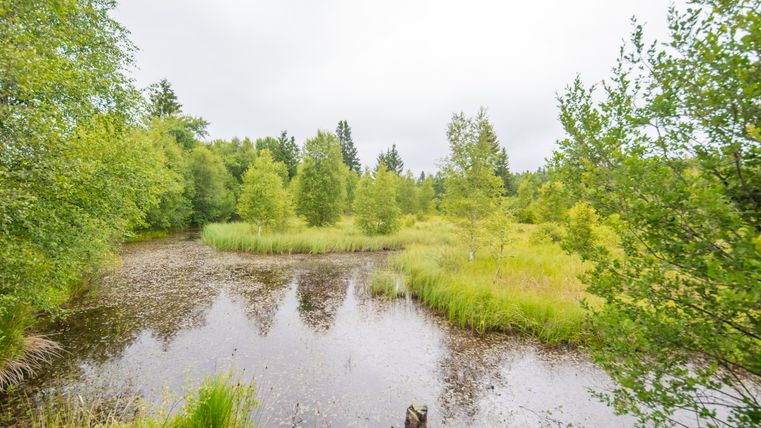
The Eifel’s bogs are among the region’s most pristine and, at the same time, most sensitive habitats.
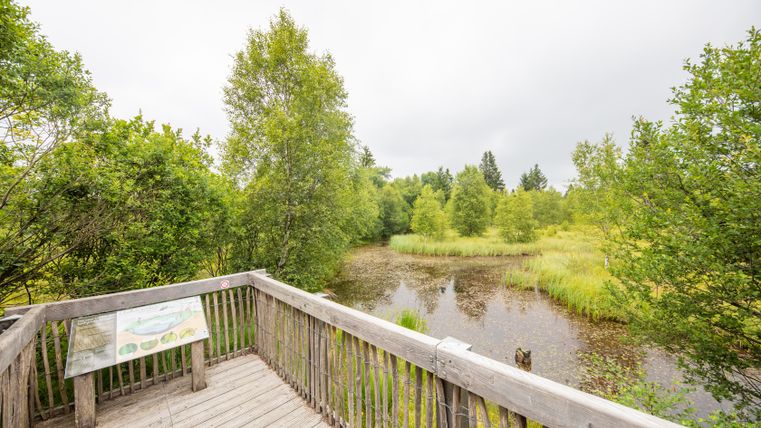
As raised bogs or transitional bogs, they formed on nutrient-poor soils and are characterized by peat mosses, wet heaths, and specialized species.
Well-known moorland areas can be found, among other places, in the Schneifel, around Dahlem, and in the Struffelt area near the Hohe Venn.
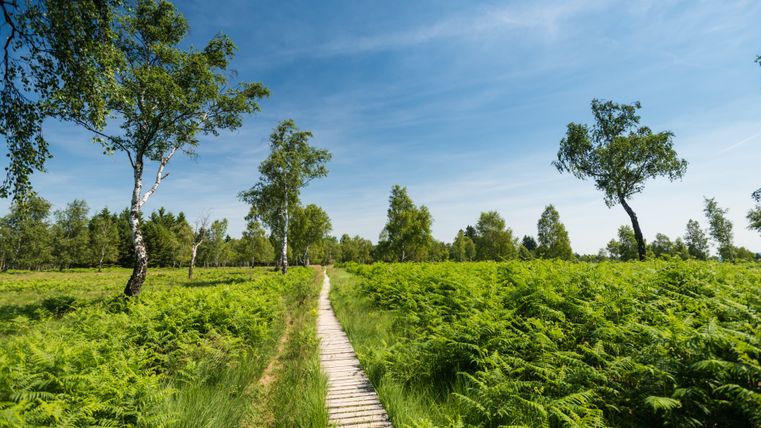
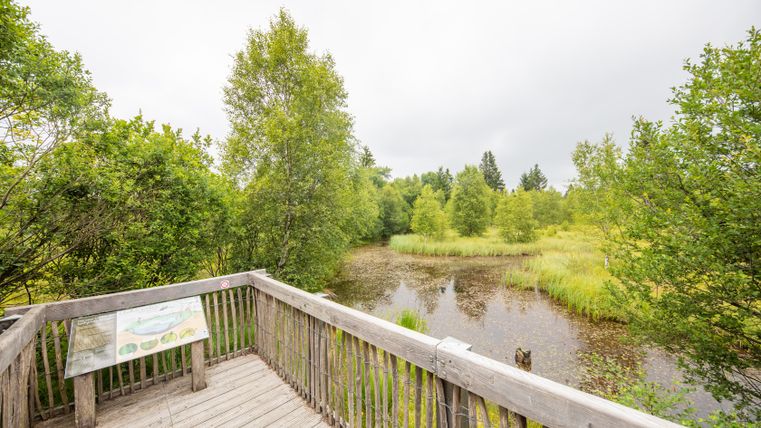
Many of these areas have undergone extensive restoration in recent years and can now be explored via designated trails and boardwalks.
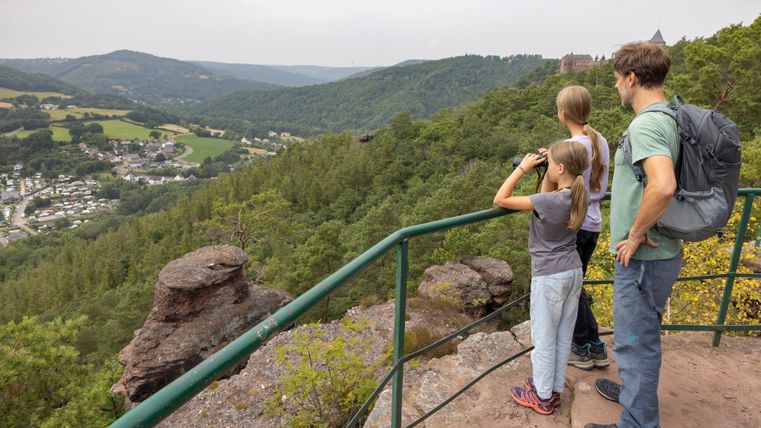
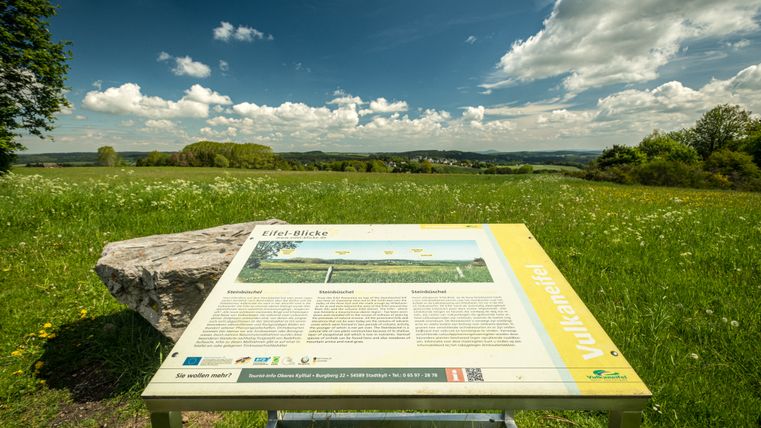
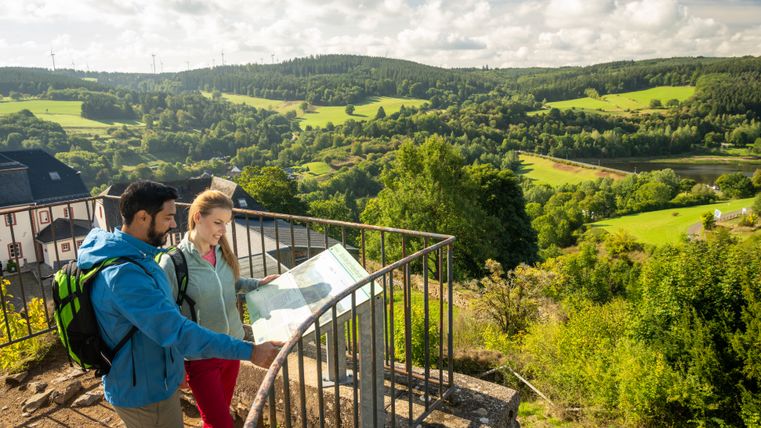
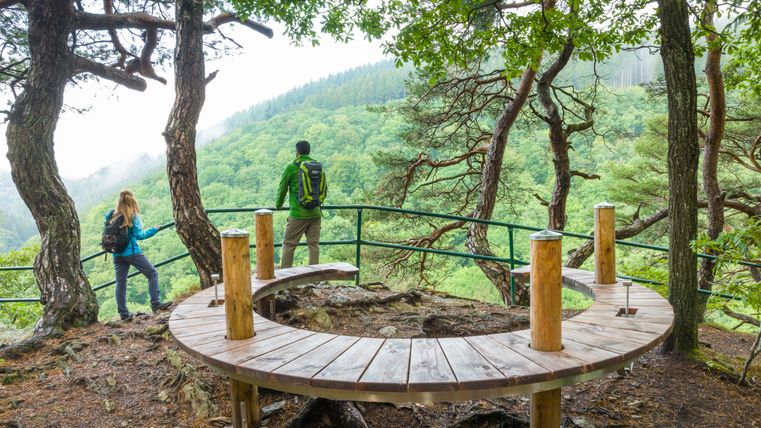
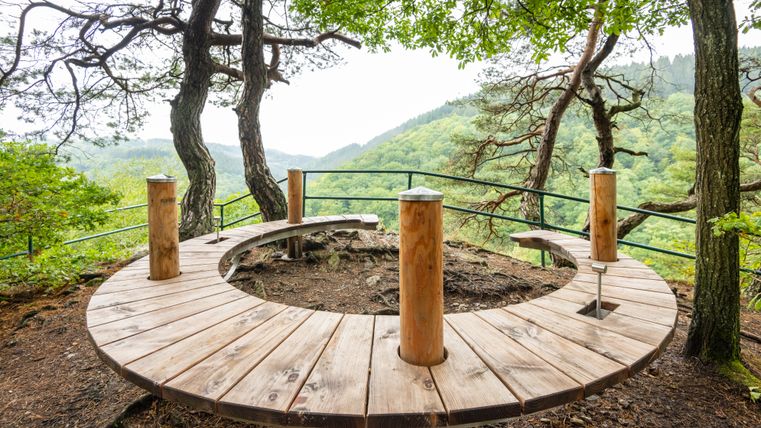
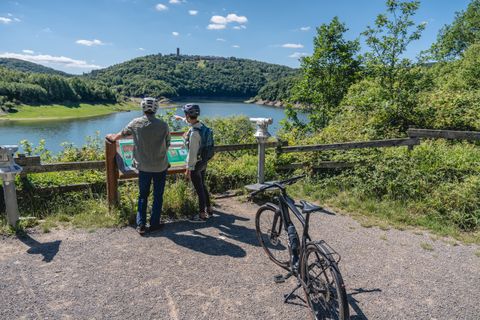
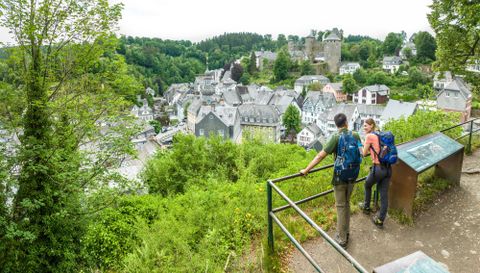
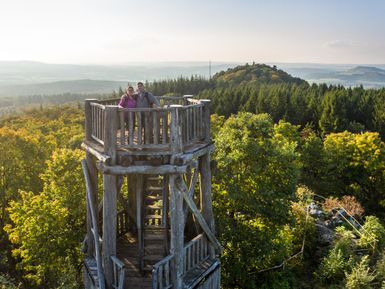
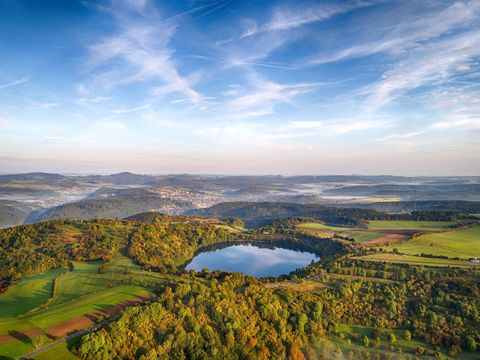
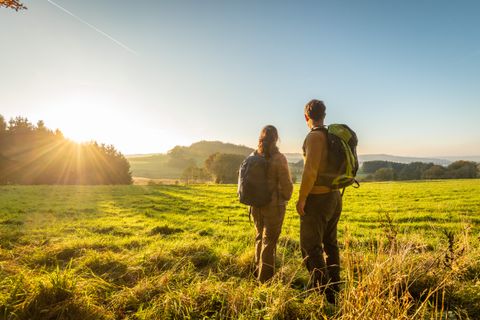
The Eifel Views lead to particularly impressive vantage points in the region and offer new perspectives on the diverse low-mountain landscape. From here, the view sweeps over forests and mountain ranges, quiet valleys, and glistening lakes—allowing you to truly experience the vastness of the Eifel in all its beauty.
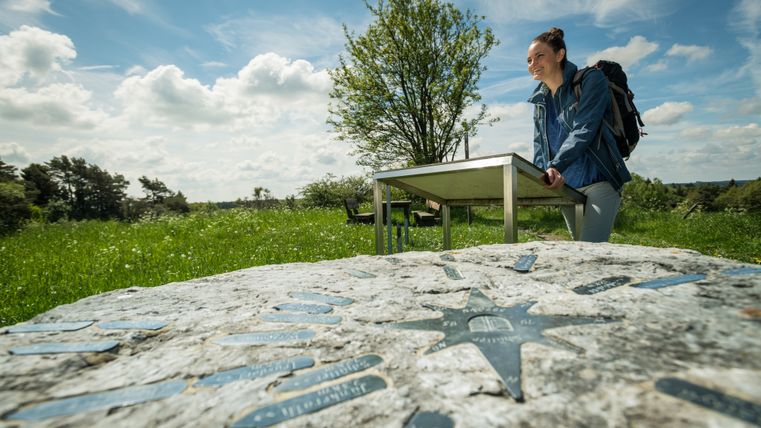
Panoramic information panels on site help you identify distinctive mountains, towns, and scenic features within your field of view. This transforms a brief pause into a conscious moment of discovery—and turns the view into a true experience of nature.
Purple Horizons
The heathlands of the Vordereifel offer a fascinating landscape with evergreen juniper trees and purple-flowering heather. Juniper trees are unique plants: sturdy yet slender like cypresses, and a aromatic ingredient in fine delicacies. And they grow where there are wide clearings. This expansive heathland was created by a special form of land management practiced until the late 1950s, known as “Schiffelwirtschaft.”
Especially in August and September—that’s when the small purple flowers of the heather create a beautiful play of colors alongside the green juniper.
With a little luck, you might spot rare butterflies; other shy inhabitants stay hidden… but they’re there, rustling, scurrying, and buzzing along the wayside. On warm summer days, a carefree, Mediterranean feeling inevitably sets in; and on refreshing autumn days, a sense of all the legends and mysteries that call this area home.
In the “Drover Heide” nature reserve near Kreuzau in the northern Eifel, you’ll find open heathlands, green meadows, as well as wild wooded areas and idyllic small bodies of water where primeval crayfish and crested newts thrive. The Drover Heide is also an important bird sanctuary, providing habitat for various bird species.
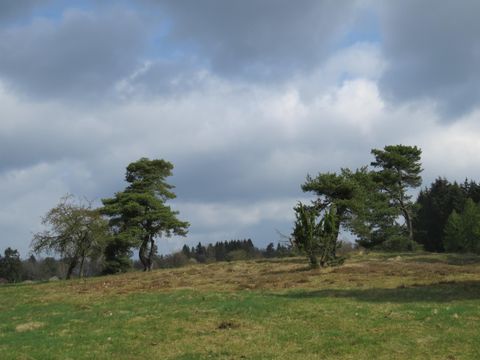
The Blumenrather Heide lies east of the local community of Virneburg on a plateau.
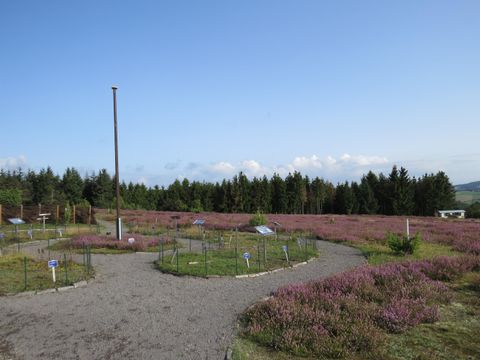
The heath garden on the Wabelsberg near Langscheid is both a nature trail and a botanical garden and provides information about the characteristic plant species of the heath.
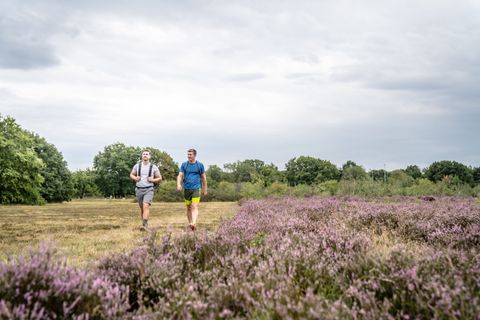
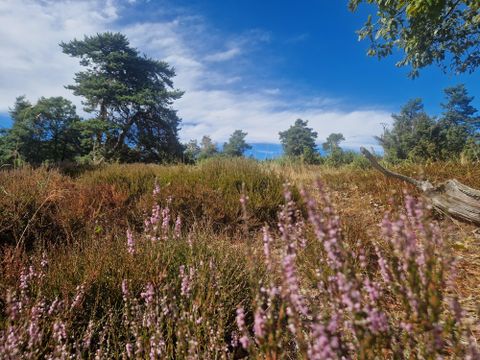
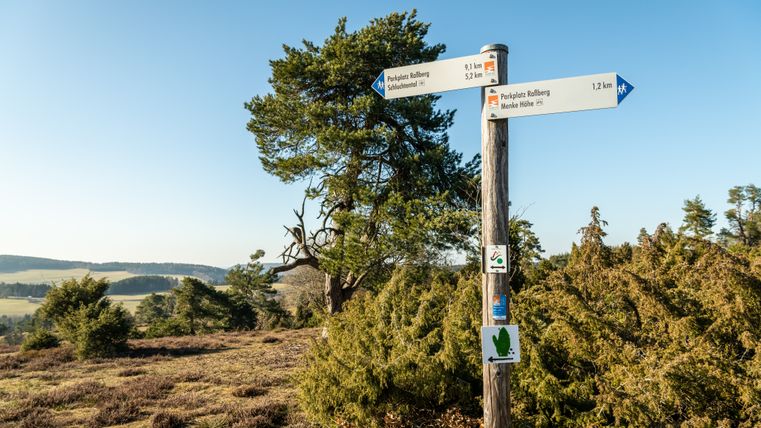
The juniper heathlands of the Vordereifel region are a real insider tip. They were created as a result of a particular form of land management.
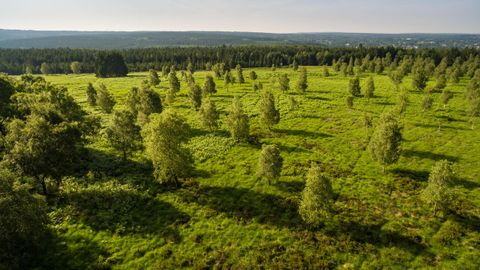
Struffelt Heath - nature reserve
Nestled in the beautiful juniper heaths you will find the rustic Wacholderhütte with a magnificent view. From here you have many wonderful hiking opportunities on foot, smaller and bigger trails are ready to be insplored.The cozy guest room and the summer terrace invite you to linger after a hike with a freshly tapped beer and the rustic cuisine.In addition, the hut is known for its large selection of homemade cakes and pies.
You can admire the heather in bloom, especially in August and September. However, the exact duration depends heavily on the weather.
You'll find a particularly large amount of heathland here:
In the Eifel, you often see common heather (Calluna vulgaris). But in some areas, such as the Struffeltheide, typical—and in some cases endangered—heathland plant species are now spreading once again.
Do not pick any plants
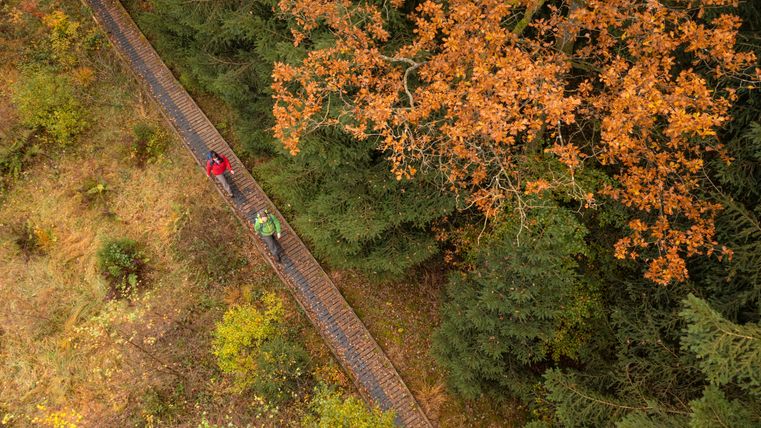
They are rare, fragile, and fascinating: the Eifel’s moors are among the region’s most pristine habitats. They lie hidden between the plateaus of the north and the mountain ranges of the Schneifel—sometimes as open raised bogs with sweeping views, sometimes as mysterious bog forests with narrow boardwalks and moss-covered ground.
Sphagnum mosses, cotton grass, and sundew define the landscape, while adders bask in the sun in damp, sunlit clearings. Narrow wooden boardwalks guide visitors through open raised bogs and hidden bog forests. Sounds grow fainter, footsteps more cautious, thoughts slower. Bogs are living archives of the landscape—they store water, sequester CO₂, and preserve pollen, traces, and history.
At the same time, they are vulnerable. Many bogs in the Eifel region could only be preserved or revitalized through years of restoration efforts. Anyone walking along the boardwalks through these special biotopes today encounters more than just a unique natural environment.
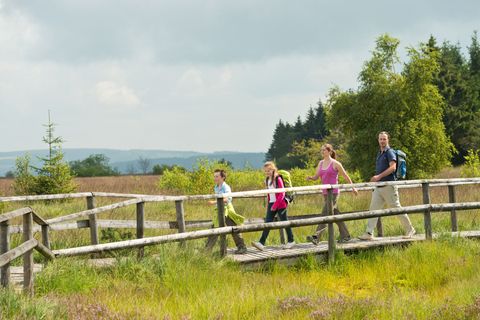
The High Fens is a unique raised bog landscape and home to rare animals and plants.
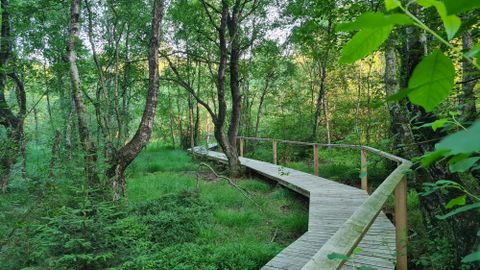
A 7,000-year-old highmoor that makes hikers and nature lovers hearts beat faster.
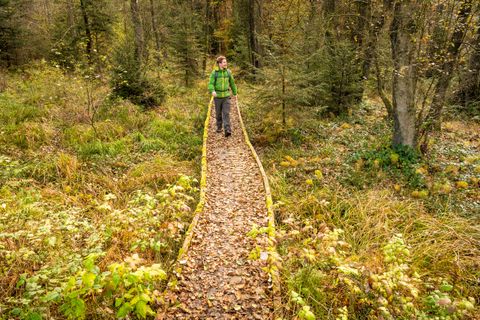
Schneifel Moor Trail
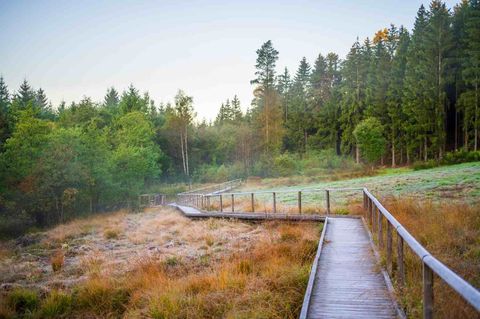
Hiking trail suitable for baby carriages in the Eifel through the Wasserdell moorland near Dahlem.
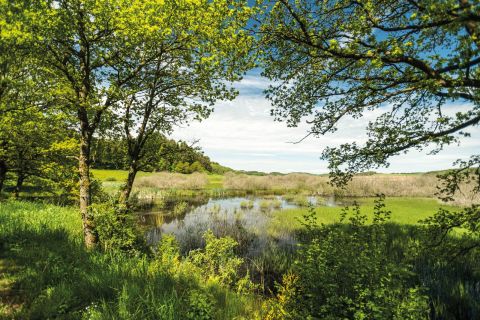
The Mürmes nature reserve near Mehren and Ellscheid is a haven for nature lovers with rare plants.
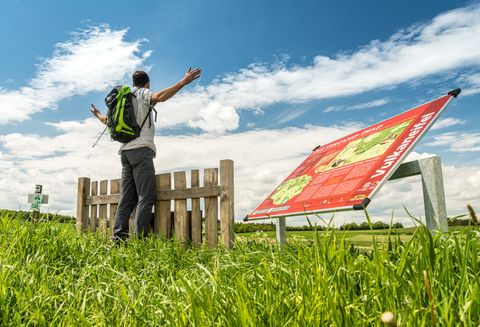
The Vulcano (volcano) path invites walkers to enjoy outstanding views and gain interesting geological information.
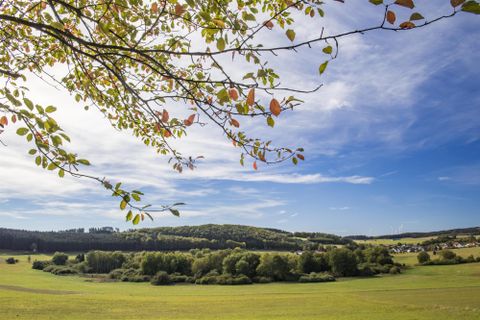
Mosbrucher Pond The Mosbrucher pond is framed by agriculturally used area of the neighbouring communities. In the areas of undisturbed marshland development, the peat thickness is up to 6 metres, on top of which a varied mosaic of different marshland communities can be found.
Medium-difficulty circular hike from Kelberg-Köttelbach with great views of the Volcanic Eifel
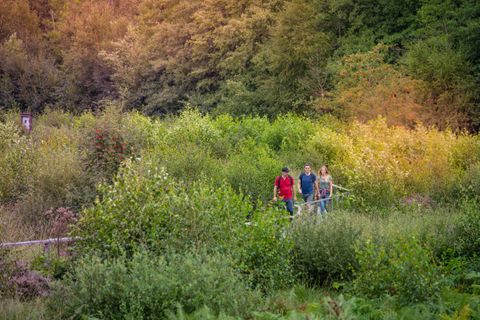
The 4.0 km long educational soil trail leads along a 700 meter long boardwalk directly over the sensitive soils and through the source area of the Weiße Wehe.
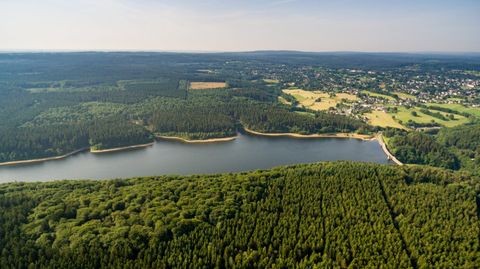
At over 450 m, the treeless Struffeltkopf rises up between Rott and Roetgen
The Hohe Venn is particularly well known. It straddles the border between Germany and Belgium.
The area covers approximately 4,100 hectares and has been under very strict protection since 1992.
The raised bogs of the High Fens formed after the end of the last Ice Age, about 7,500 years ago. Heavy rainfall, cool temperatures, and nutrient-poor soils created ideal conditions for the formation of peat mosses and bogs.
Wooden boardwalks protect both visitors and nature. They allow for dry and safe hikes while preventing damage to the sensitive vegetation and peat soil.
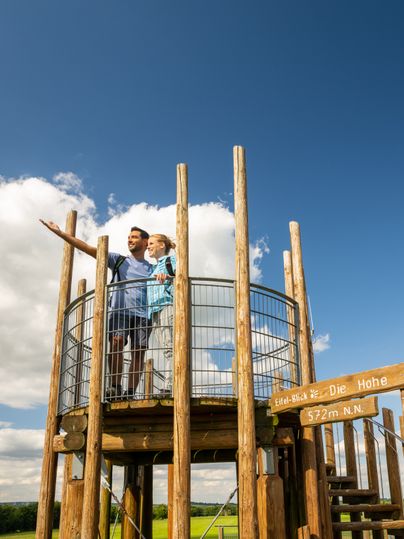
The Eifel-Blicke (Eifel Views) take you to some of the region’s most beautiful vantage points. From here, you can enjoy sweeping views of forests, mountain ranges, valleys, and lakes—and experience the Eifel in all its scenic diversity.
Panoramic information boards on site help you identify prominent mountains, towns, and landmarks in your field of view and appreciate the landscape more fully. This turns a simple break into a true nature experience.
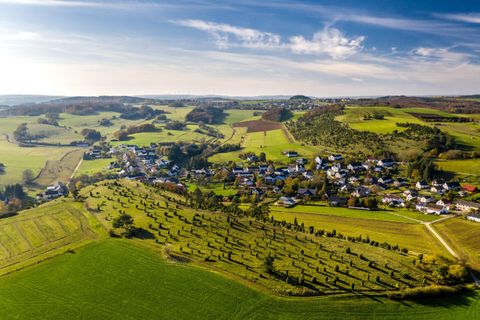
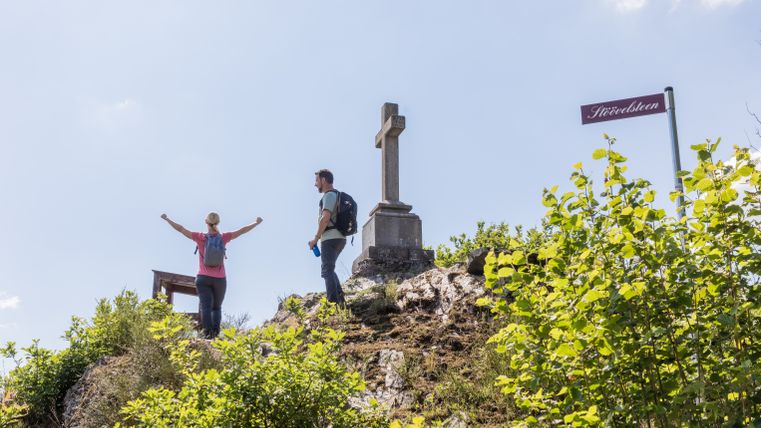
Here, there is a panoramic view onto the hills of the “Lampertstal”. From the highest point of Calvary Hill, daytrippers can enjoy the best view onto one of the most beautiful and largest juniper heathlands in North-Rhine Westphalia. The nature conservation area with its wild, slim, tall shrubs extends over an area of 650 hectares, suddenly giving the North Eifel region, which is otherwise covered with dense forest, a Mediterranean feel.
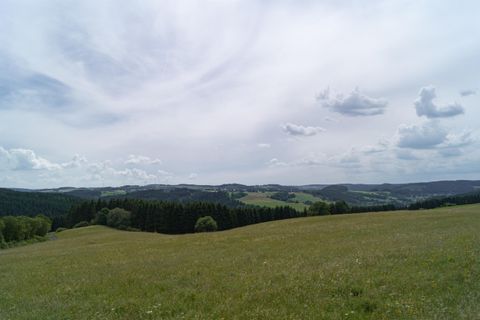
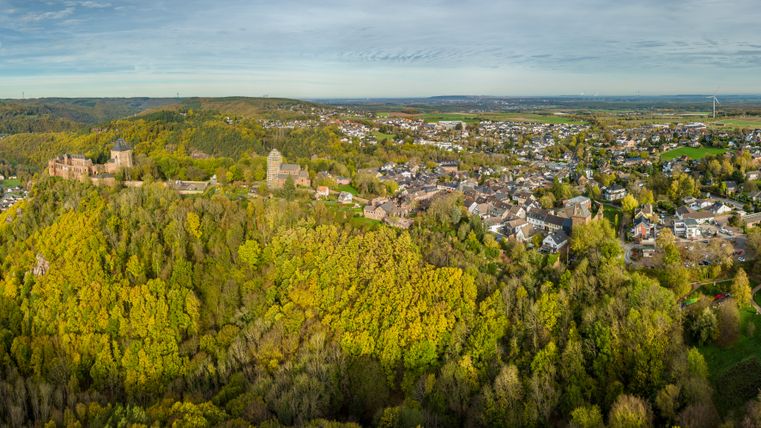
At an altitude of 470 metres above sea level, you look south-east over the historic castle town of Reifferscheid. The village includes the castle complex with the outer castle and the castle ring as well as the valley settlement at the foot of the castle.
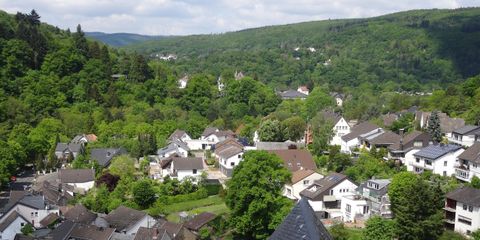
This "Eifel view" on the keep (220 meters above sea level) of Hengebach Castle offers you a view in a south to north-westerly direction over the Heimbach district, with two core areas of the Eifel National Park in the field of vision.
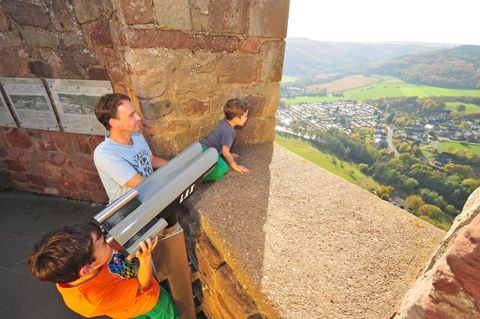
This Eifel view (approx. 300 meters above sea level) on the west tower, the so-called "Damenerker", of the castle offers you a distant view in a south to north-westerly direction over the middle Rur valley and the northern parts of the Eifel National Park as far as the high plateau of the Rur Eifel.
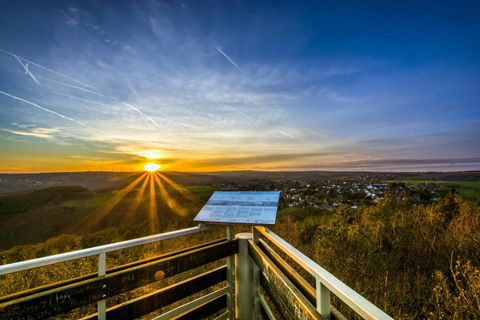
From the "Krawutschketurm", named after the Eifel hiker Franz Krawutschke, there is a breathtaking view over the mountain ranges of the Eifel and from the edge of the parking lot, the view sweeps over the widening valley of the Rur with the Obermaubach reservoir over the edge of the Eifel into the Jülich Börde and the Cologne Bay.
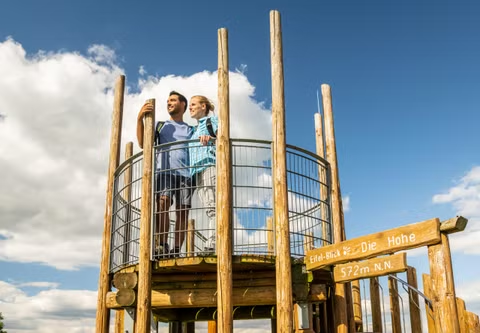
Far-reaching view from "Der Hohe" into the Monschau countryside.
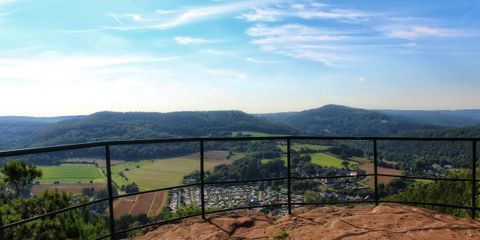
As the name suggests, this Eifel view is located above the Rur in the Effelsley area at an altitude of 275 meters above sea level.
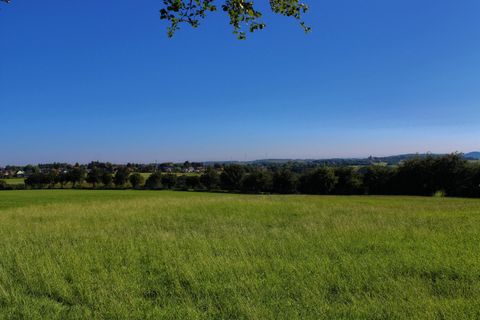
From this "Eifel view" (455 meters above sea level) you can enjoy a panoramic view in a north-easterly direction over the village of Vossenack and the Rureifel plateau as far as the Bay of Cologne on clear days.
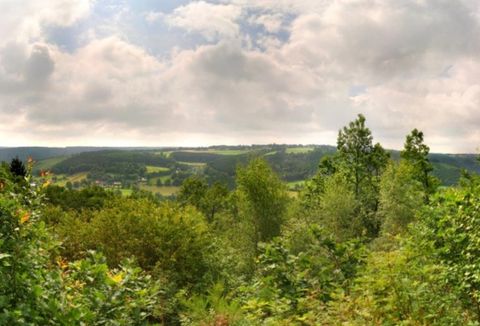
The Eifel view "Grünenthal" near Monschau-Imgenbroich offers a view over the valley of the upper Rur at an altitude of 490 meters above sea level before it flows into the Rur reservoir.
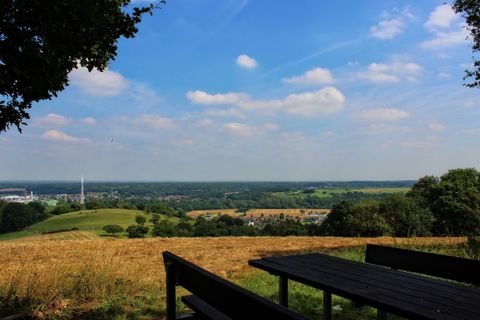
This "Eifel view" is located on the 253-metre-high Hemgenberg to the west of the Kreuzau district of Winden.
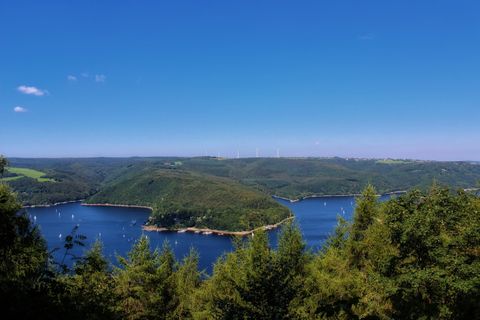
The Hirschley is located at an altitude of 512 meters above sea level. From here, you can enjoy an impressive panoramic view of Lake Rursee and the steep slopes of the northern shore.
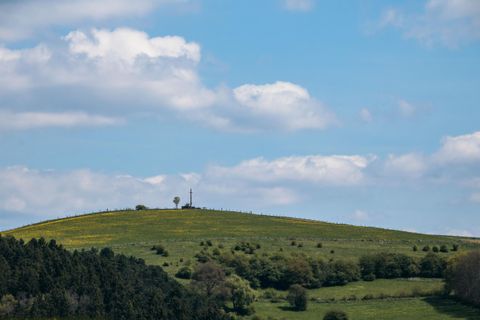
This view of the Eifel (533 metres above sea level) offers views of many Eifel mountains, such as the Kelberg, Boxberg, Eselsberg and Stromberg. In good weather, you can see the grandstands of the Nürburgring from here. In silence you might even think you can hear the sound of engines.
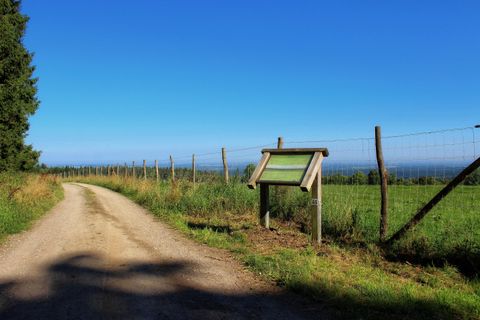
This Eifel view from the highest point in the district of Düren (566 m above sea level) and directly on the district border with Aachen offers you an impressive distant view to the west over the Hürtgen Forest into the Aachen region and as far as the Dutch province of Limburg, and to the north into the Jülich Börde and the Cologne Bay.
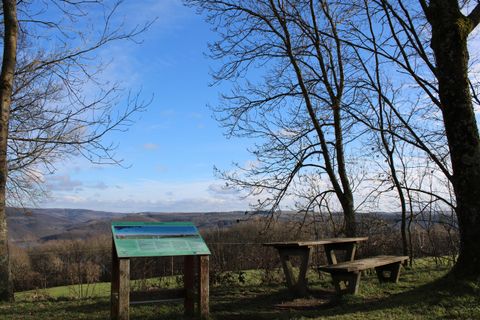
Wonderful view of the Eifel National Park.
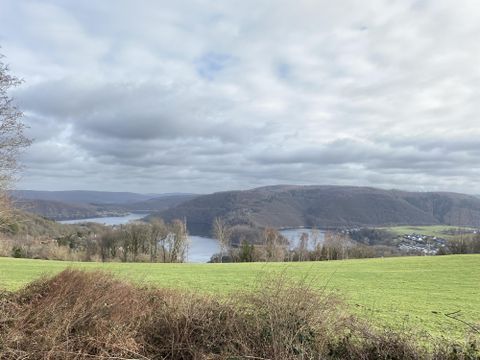
Panoramic view of the Rursee from Steckenborn.
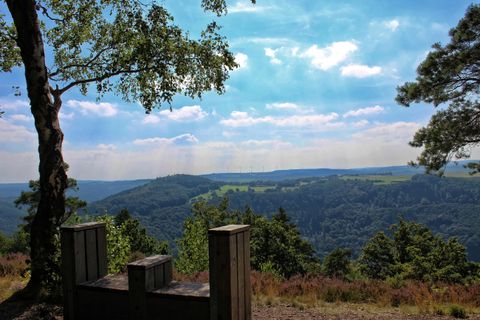
This Eifel view, situated on the Mausauel above the Obermaubach reservoir, is 350 meters above sea level and offers you a distant view in a south-westerly to north-westerly direction over the Rureifel plateau and the Hürtgen Forest as far as the High Fens.
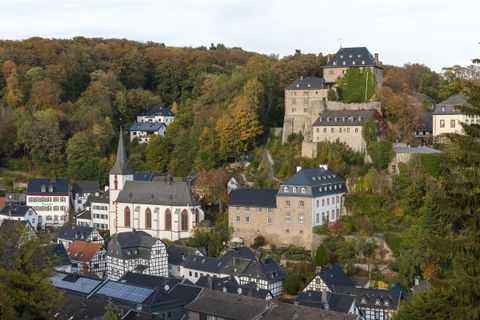
In the picturesque village centre of Blankenheim, visitors dive into past times. The spring of the river Ahr, the historic town gates, the late gothic parish church and numerous half-timbered buildings adorn this historic place.
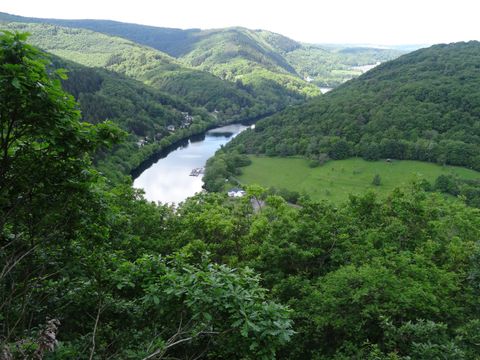
This Eifel view, at an altitude of 340 meters above sea level, on the Bildchesberg offers you a distant view in a south to north-westerly direction, with two core areas of the Eifel National Park in the field of vision.
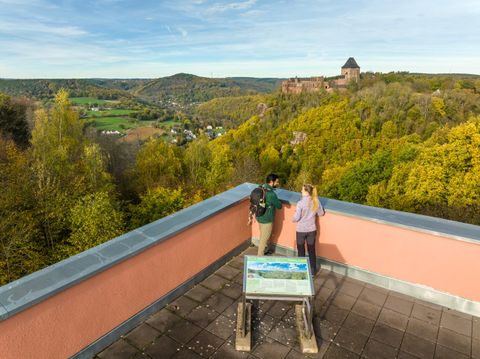
From the large viewing terrace of Nideggen Youth Hostel, visitors can enjoy a unique view of the vast Rureifel landscape.
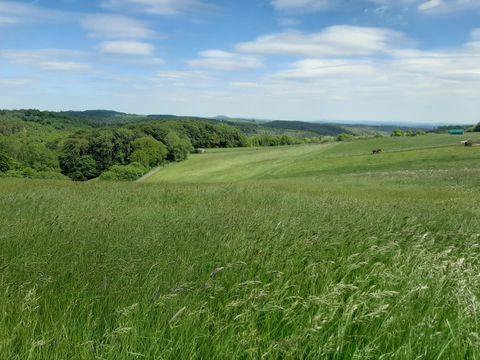
From this location (540 metres above sea level) you have a wonderful view over the Ahr and Eifel landscape in good weather.
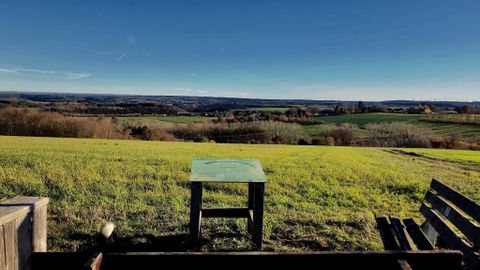
A magnificent view is offered here on the edge of the village of Dreiborn on the Dreiborn plateau 567 metres above sea level. The view stretches far in a south-easterly direction to the hilltops of the Volcanic Eifel.
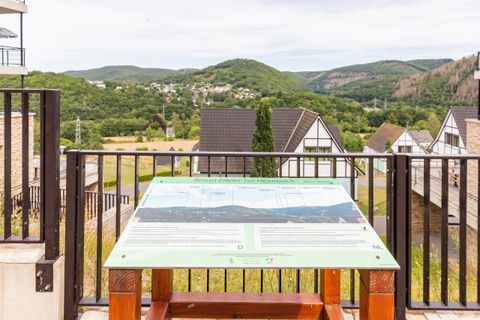
This Eifel view is located on the promenade of the Dormio Resort "Eifeler Tor". It offers a wonderful view of the Rur valley and over Heimbach-Hasenfeld.
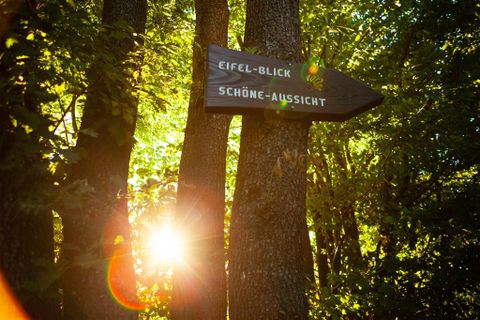
This Eifel view on the "Simonsley" (415 meters above sea level) offers you an impressive panorama above the Rursee in a south-easterly to south-westerly direction, with the "Kermeter", a core area of the Eifel National Park, drawing the eye.
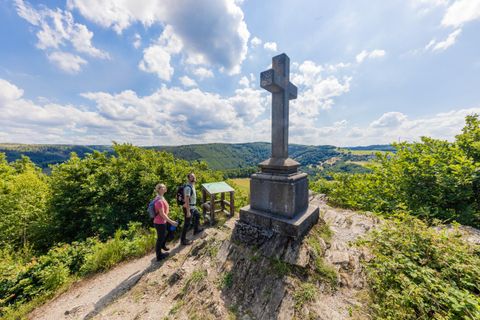
Panoramic view of the Rur valley and the village of Dedenborn.
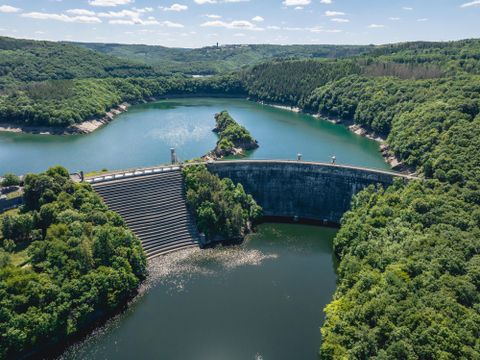
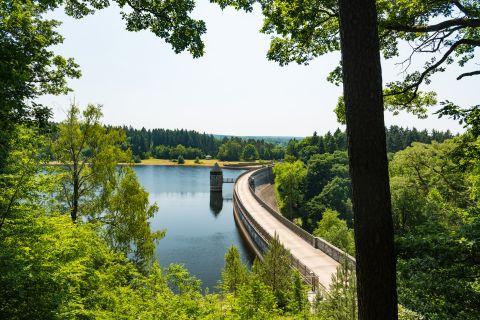
Viewing platform at the Urft dam. The viewing platform on the Urft dam wall was the site of the barrier keeper's homestead built between 1924 and 1926 until it was destroyed in the Second World War.
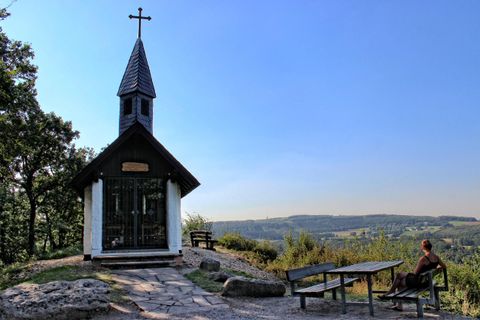
This Eifel view on the Mausauel, above the Obermaubach reservoir, is located at an altitude of 250 m above sea level and offers you a view in a northerly (westerly) direction beyond the reservoir to the last hills of the northern Eifel before the transition to the Jülich-Zülpicher Börde.
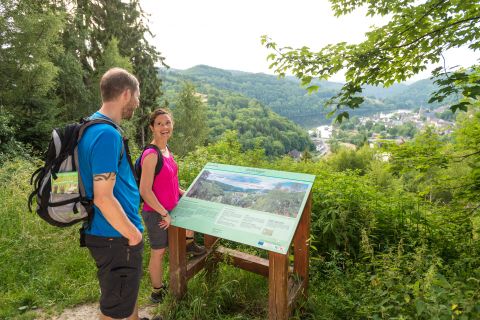
Situated high above Einruhr, a fantastic distant view.
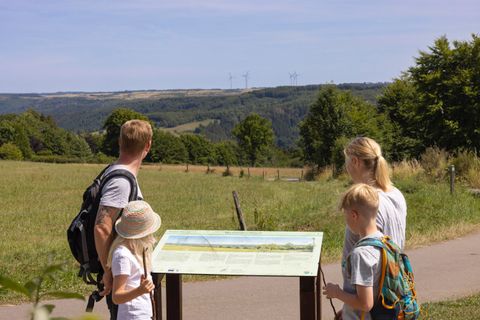
A fantastic panoramic view over the Eifel landscape.
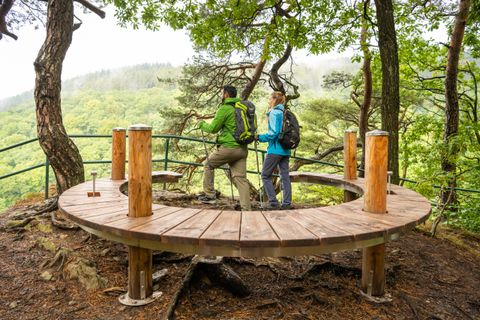
From the Perdsley, visitors can look out over the picturesque Rur valley at a height of around 400 meters above sea level in the direction of Monschau. The name is made up of the words "Perd" for horse and "Ley" for rock.
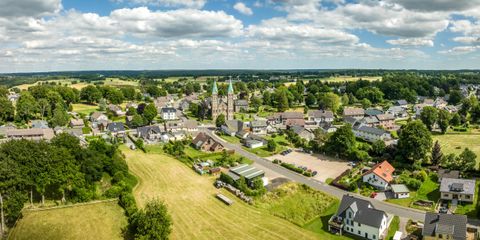
"Ruitzhof" belongs to Monschau-Kalterherberg and is located at 570 meters above sea level.
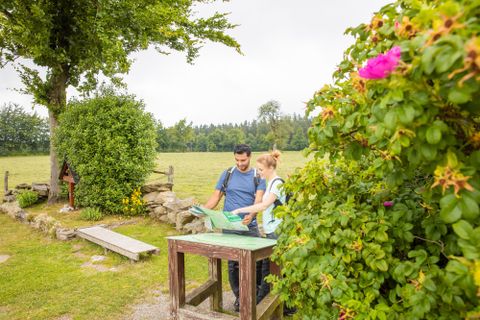
At 658 meters above sea level, the Steling is the highest elevation in the Aachen city region. The excellent visibility was the reason why there was once even a fire watch tower on the Steling, and the view extends far to the east over the Eifel National Park.
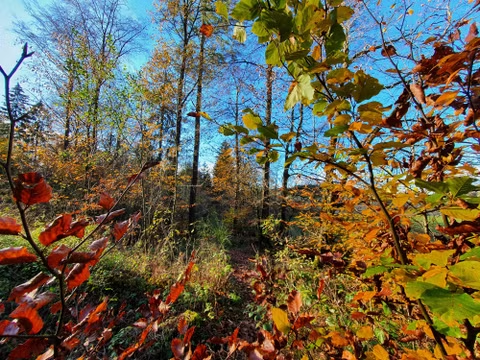
Let your eyes wander, get insights into nature reserves and look at distances up to 50 km, which guarantees relaxation and relaxation.
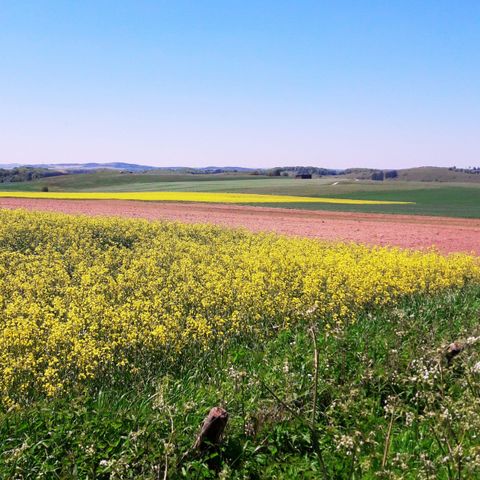
Let your eyes wander, get insights into nature reserves and look at distances up to 50 km, which guarantees relaxation and relaxation.
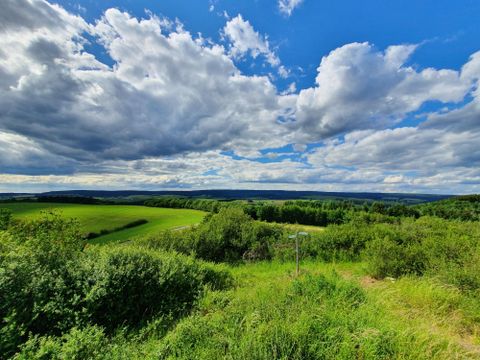
Let your eyes wander, get insights into nature reserves and look at distances up to 50 km, which guarantees relaxation and relaxation.
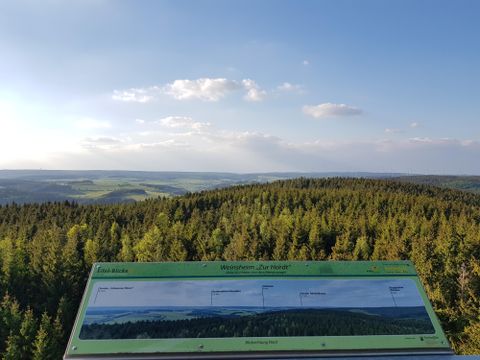
Let your eyes wander, get insights into nature reserves and look at distances up to 50 km, which guarantees relaxation and relaxation.
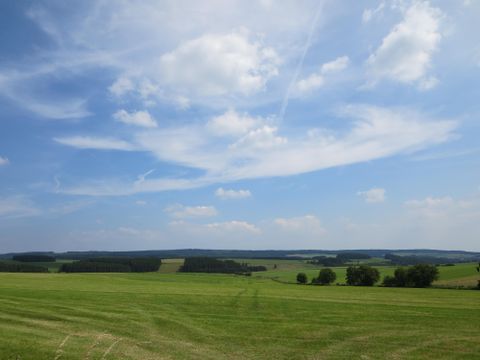
Let your eyes wander, get insights into nature reserves and look at distances up to 50 km, which guarantees relaxation and relaxation.
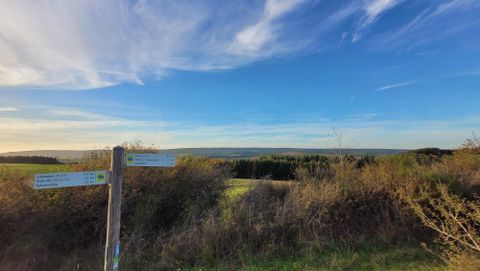
Let your eyes wander, get insights into nature reserves and look at distances up to 50 km, which guarantees relaxation and relaxation.
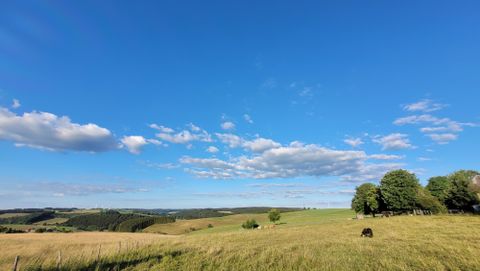
Let your eyes wander, get insights into nature reserves and look at distances up to 50 km, which guarantees relaxation and relaxation.