Copyright: Eifel Tourismus GmbH, Dominik Ketz
Mineral springs in the Eifel
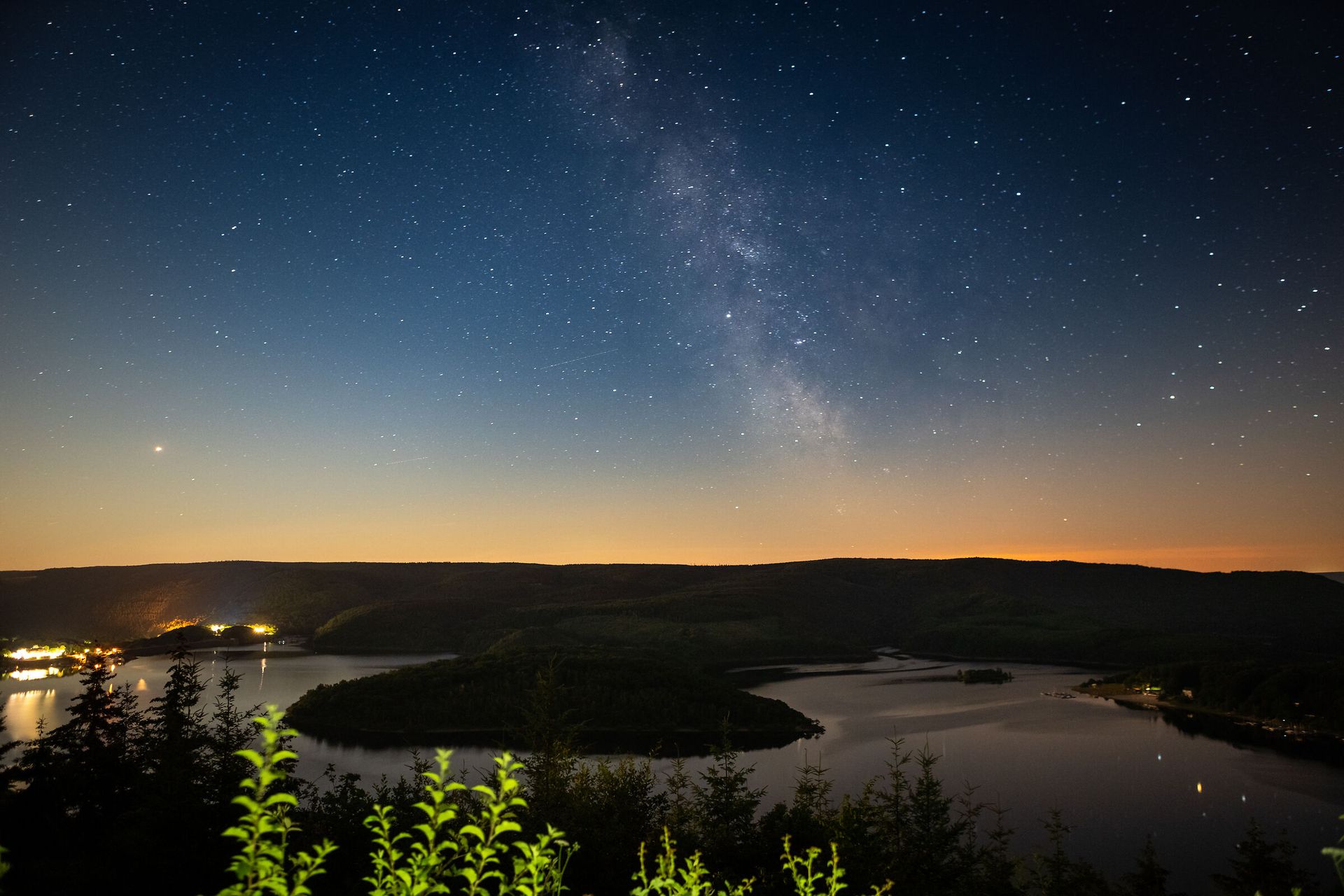
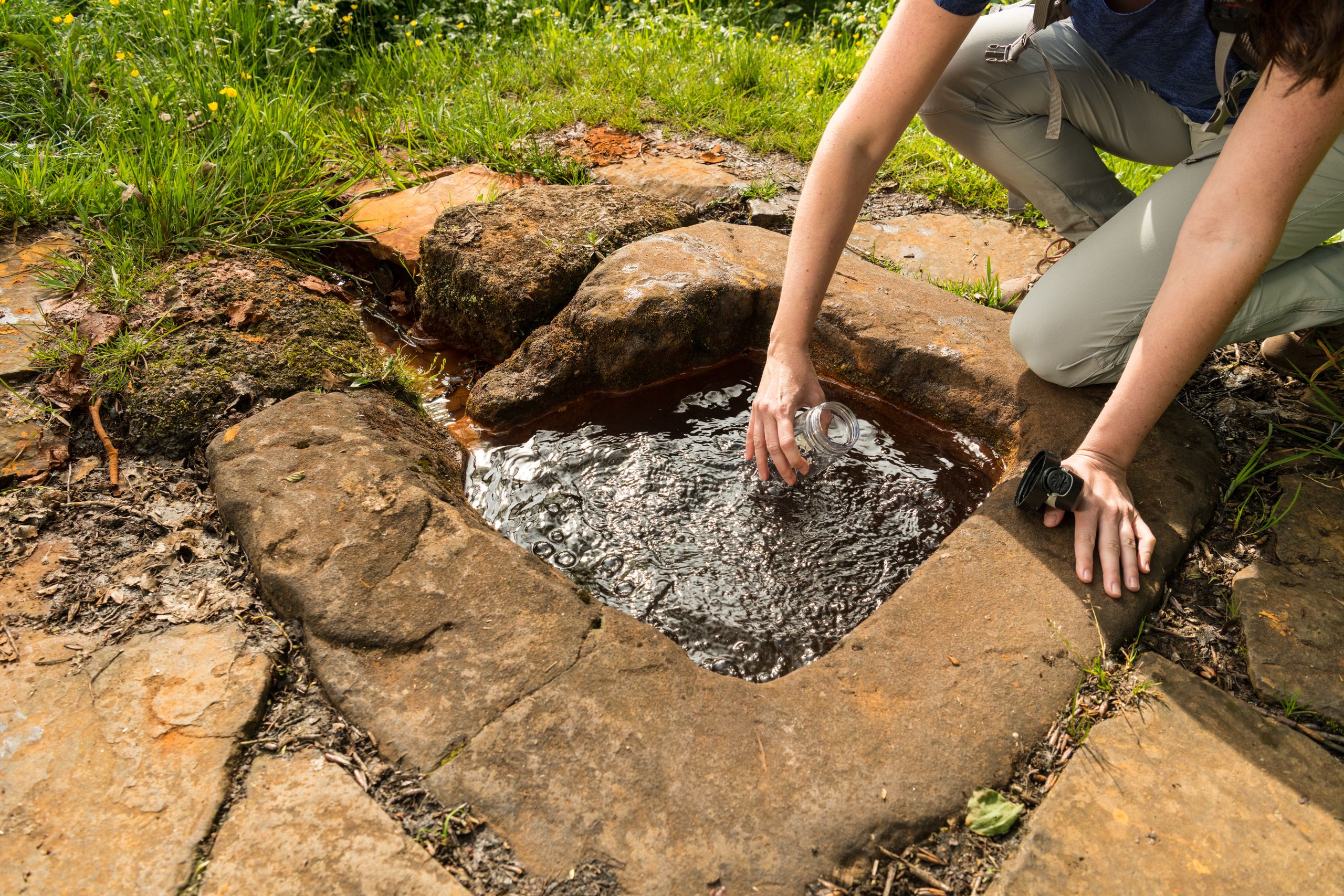
Around 10,000 years ago, the last time there was a huge crash in the Eifel, lava flows made their way, maars formed and the landscape as we know it today was formed. The elements have wrestled with and influenced each other over many millions of years. The enormous earth movements are over, but beneath the surface, at great depths, they bubble up, the mineral and carbonic acid springs of the volcanic Eifel. They give us delicious water. In the Eifel they are called Drees. The special thing about them: You can still tap fresh spring water in many places today. How refreshing it is to fill your water bottle with sparkling water during a hike and quench your thirst! Various hiking trails make it possible to make a stop on a tour.
Mineral water from the Eifel
The mineral waters from the Volcanic Eifel are extraordinarily rich in valuable minerals. They owe this to the volcanic subsoil that they pass through on their long journey. Carbon dioxide, which produces carbonic acid when combined with water, is responsible for the mineral enrichment. It comes from the earth's interior and is effectively the breath of the volcanoes. No two Drees are the same; every water tastes different. Of course, the health authority regularly checks the quality of the mineral springs, so the water can be tasted without hesitation. Information boards tell visitors more about the volcanic past of the area and the respective mineral compositions.
6 results
Gerolstein Fountain Visitor Center
GerolsteinOpen today
The new Gerolsteiner Erlebniswelt invites visitors on an interactive journey through the history, creation and bottling of Gerolsteiner mineral water - explained in an exciting way for children and adults. In around 90 minutes, interactive stations and the characters G-Rex, Mina and Sparky show visitors why the water is so rich in minerals and how the well-known Gerolsteiner mineral water is made from rainwater.
Helenenquelle
GerolsteinOpen today
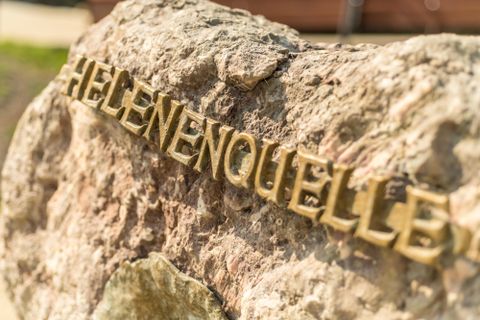
The Helenenquelle on the Kyll Cycle Path near Gerolstein Town Hall is a popular resting place for cyclists and hikers. The fresh mineral water comes from a depth of approx. 90 m and can be drunk free of charge from April-October from the brass tap. Here it is worth taking a break and the park is ideal for a small picnic in nature.
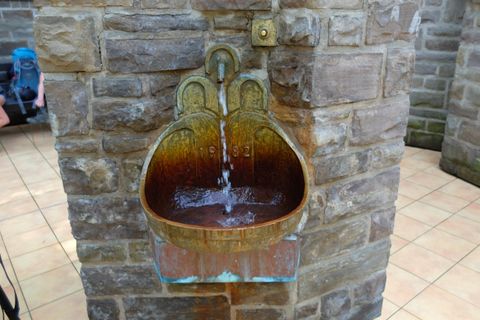
Dunaris source
DaunOpen today
The"Dunaris Quelle" has been called "Frauendrees" by the local population for centuries. You will find the spring in the health resort park of Daun and it is a stop on the"Drees"hiking trail.
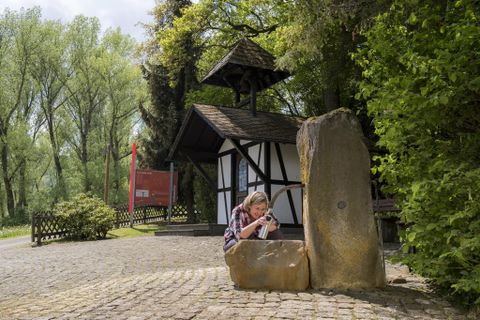
Vulkania healing spring
Dreis-BrückOpen today
Another testimony of volcanic origin is the Vulkania healing spring, not far from the Nürburg spring in Dreis-Brück. The recognised healing water is a little refreshment on the way.
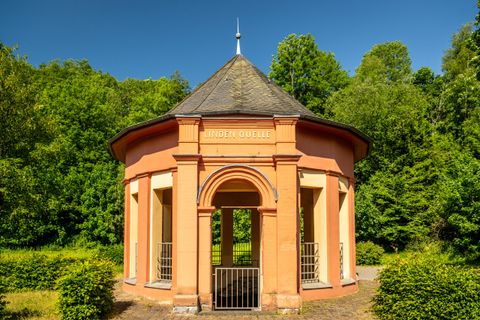
Linden spring
BirresbornOpen today
The existence of the village Birresborn was documented for the first time in 721. The name "Birgisburias" can be translated as "good source".Numerous finds in the area of the source evidence that this source was already known to the Romans.
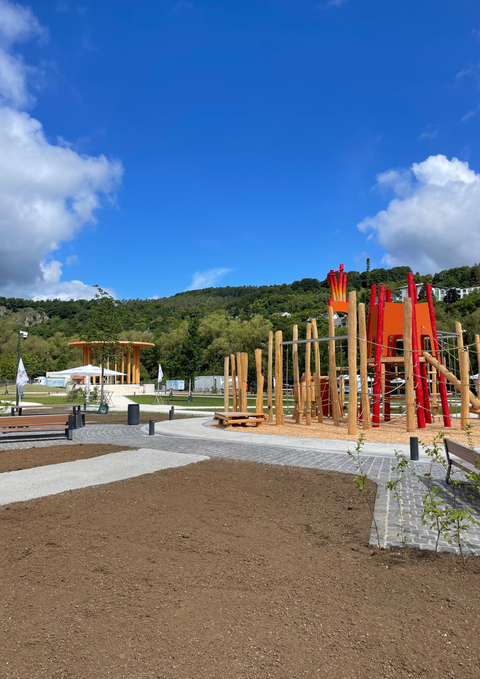
Sternpark Gerolstein
GerolsteinOpen today
Welcome to the GEROLSTEINER STERNPARK – a place where nature, movement, and encounters come alive in the heart of Gerolstein.The Gerolsteiner Sternpark is dedicated to the themes of nature, health, sustainability, and water – presenting them in a variety of inspiring ways.
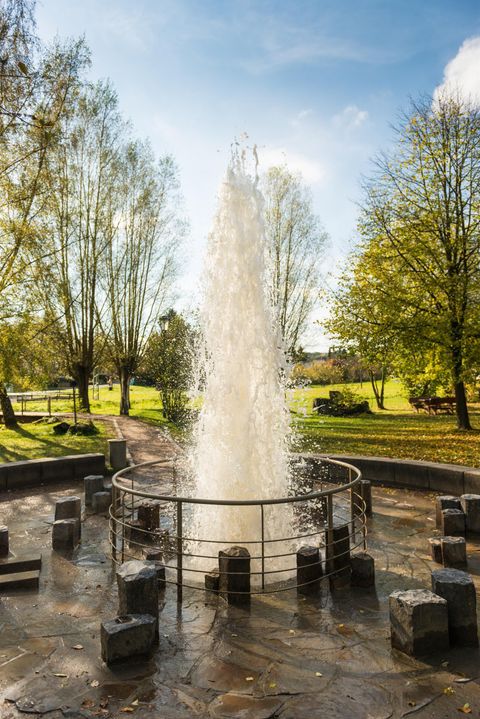
More mineral springs in the Eifel
The Eifel's mineral springs are a fascinating natural phenomenon with historical and health-promoting value - and an integral part of the regional identity
But what exactly is a Drees?
A Drees is a mineral-rich spring from which carbonated water flows naturally. There are numerous of these volcanic springs in the Eifel, whose water often has a high iron, magnesium or calcium content. Many of the Drees springs are tapped, equipped with pools or small fountains and are open to the public
9 results
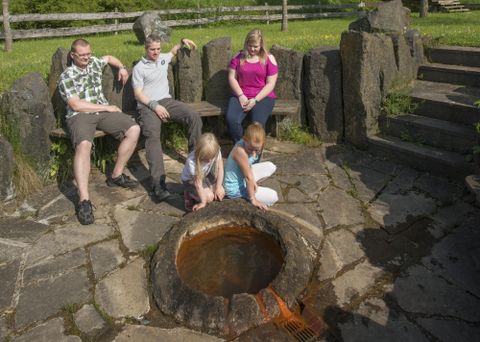
Bodenbacher Drees
BodenbachTreat yourself to a drop of health from the Bodenbach mineral spring.The Bodenbach Drees is one of many carbonic acid sources in the region.
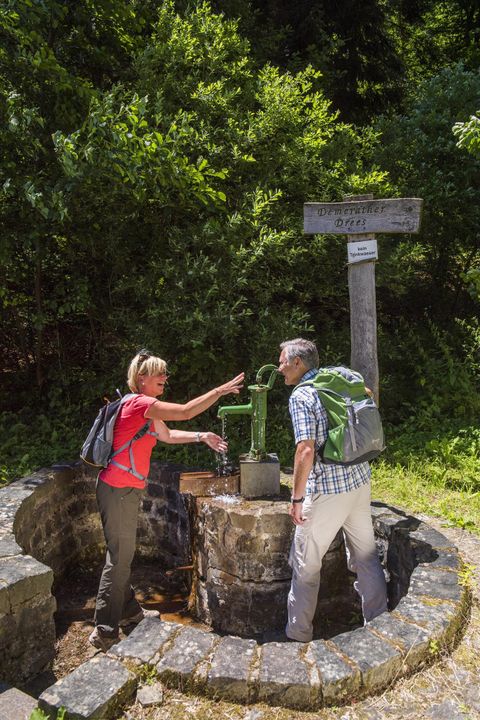
Demerather Drees
DemerathOpen today
The Demerather Drees is a "Säuerling" (acidulous spring) in the middle of the forest, close to the Geisert juniper nature reserve. Hike along the Vulcano Trail and refresh yourself here.
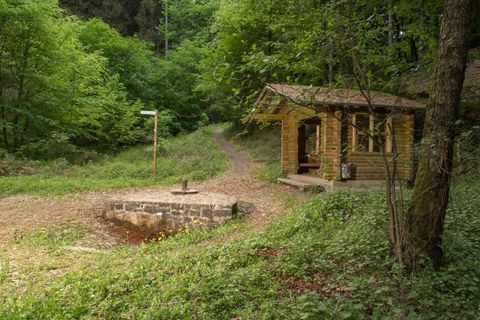
Dockweiler Drees
DockweilerOpen today
Outside the village of Dockweiler, to the south-east in the forest area, you will find the Dockweiler "Drees". The iron-rich mineral water bubbles out near the "Hasbach".
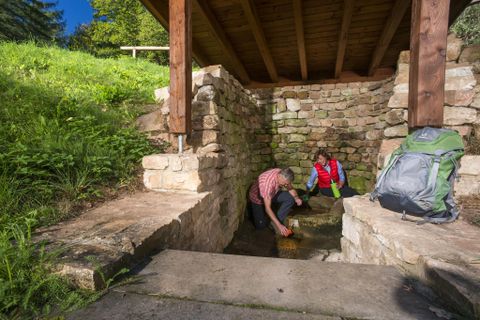
Dreisborn Mineralquelle
BettenfeldOpen today
The “Dreisborn” in the upper Prembach valley below the Mosenberg volcanic group is a constantly producing mineral spring, a so-called “Säuerling” (acidulous spring). The “Dreisborn” belongs to the municipality of Bettenfeld.
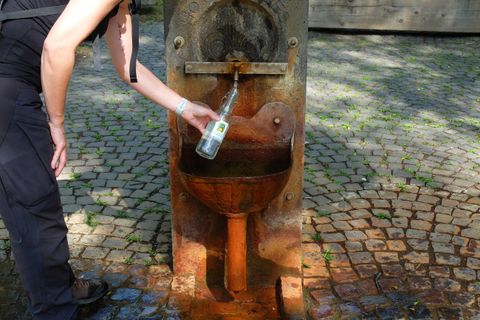
Hotzendrees
DaunOpen today
The most popular "Drees" in the town of Daun is the "Hotzendrees", located at the foot of the Burgberg (castle hill) and a stop on the "Drees" hiking trail. The tasty sparkling water "bounces" out of its source.
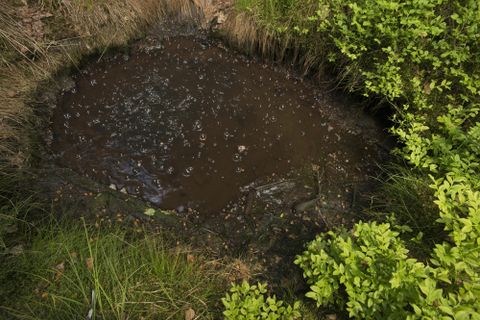
Kohlendioxidquelle im Gelenberger Wald
GelenbergMany years ago it was believed that the release of carbon dioxide was a sign of extinct volcanism. But this is not the case: the molten rock inside the earth (magma) contains, in addition to mineral components, gases such as carbon dioxide, water vapor, sulfur dioxide, fluorine and chlorine. Depending on how warm it is and how much pressure is created, they escape through cracks in the earth's crust. The source of carbon dioxide in the Gelenberg Forest is a Mofette.
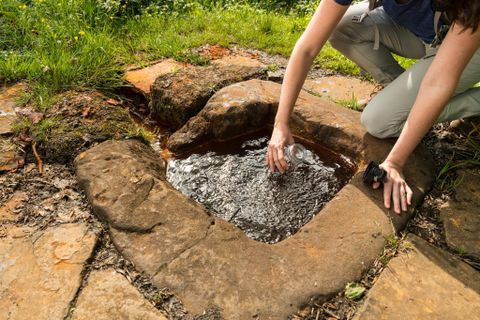
Steffelner Drees - Steffeln
SteffelnOpen today
A mineral spring with CO2-containing water.
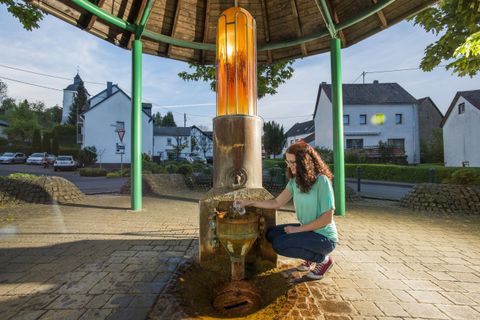
Steinborner Drees
DaunOpen today
In the Steinborn district, only a few kilometres from the town of Daun, ferrous mineral water bubbles up from the spring in the centre of the village.
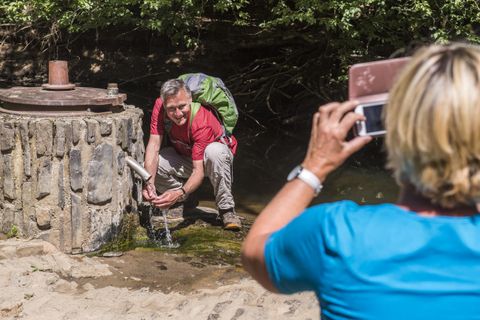
Strotzbüscher Quelle
StrotzbüschOpen today
In the Westeifel-Moseltal region, hikers will find the "Strotzbüscher Quelle", a warm mineral water spring. The water temperature of this warm spring located in the Ueßbach valley is almost 20°C.