Copyright: Eifel Tourismus GmbH, D. Ketz
Löwen- und Philippsburg in Monreal
Monreal
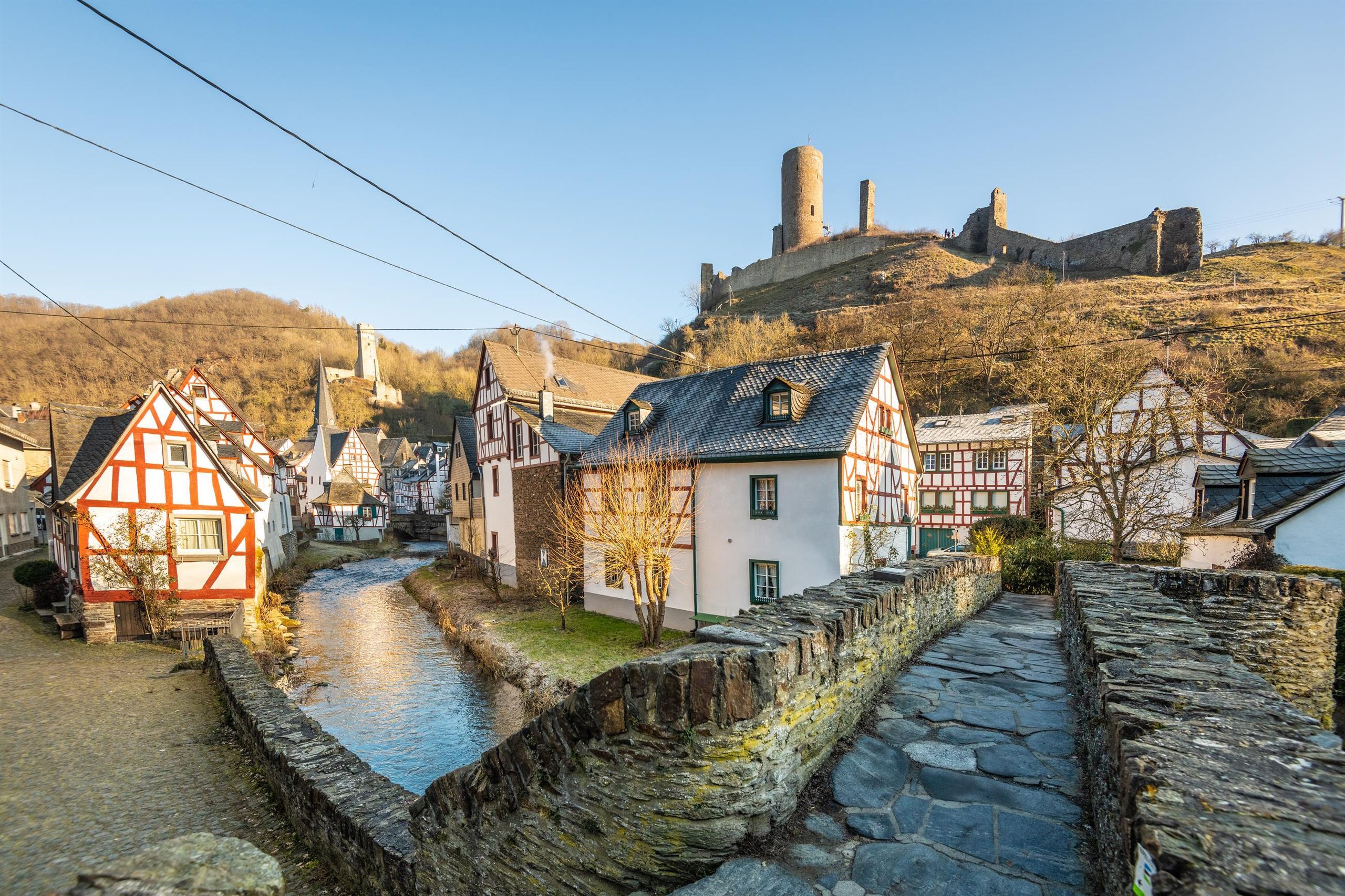
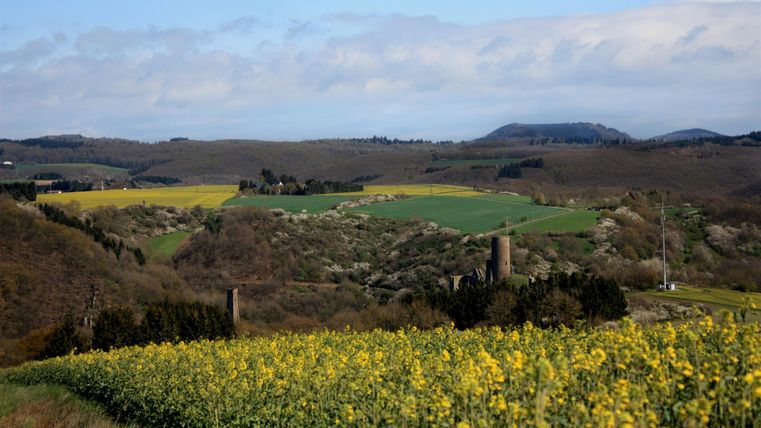
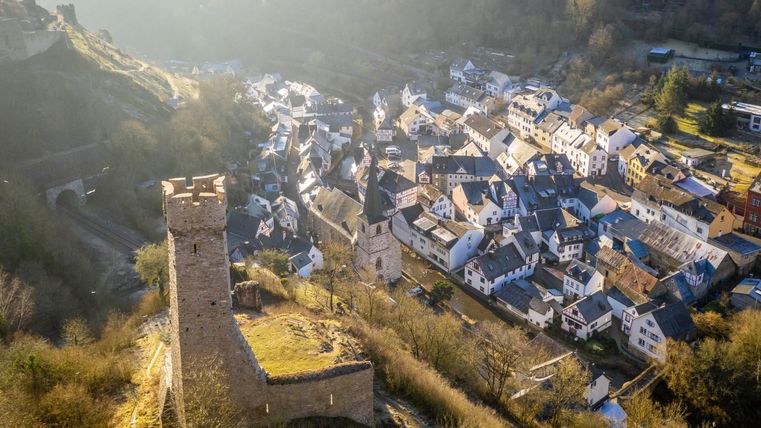
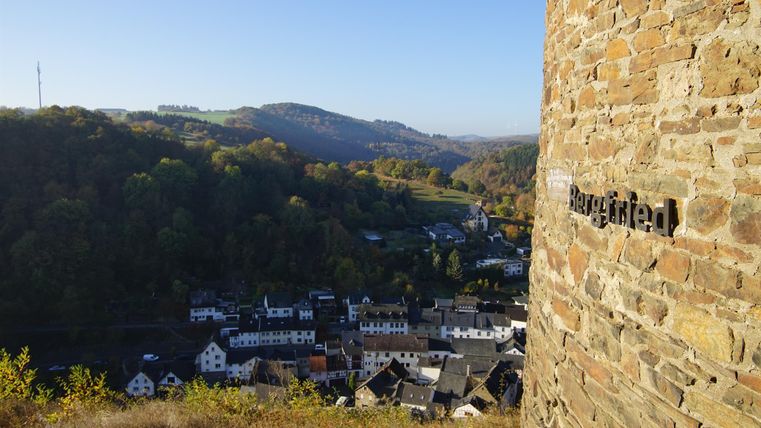
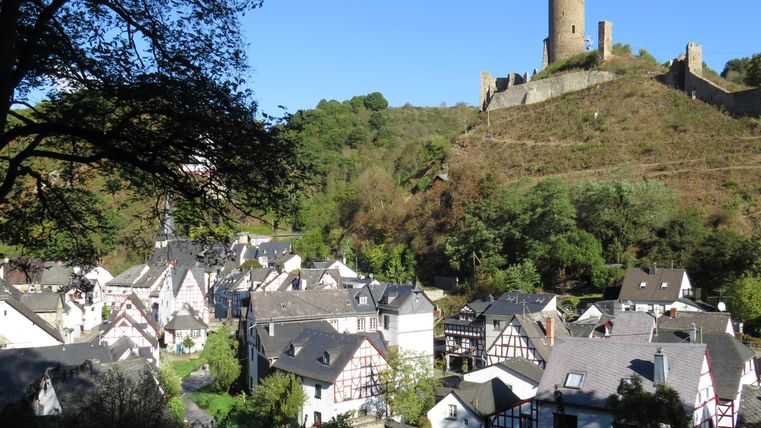
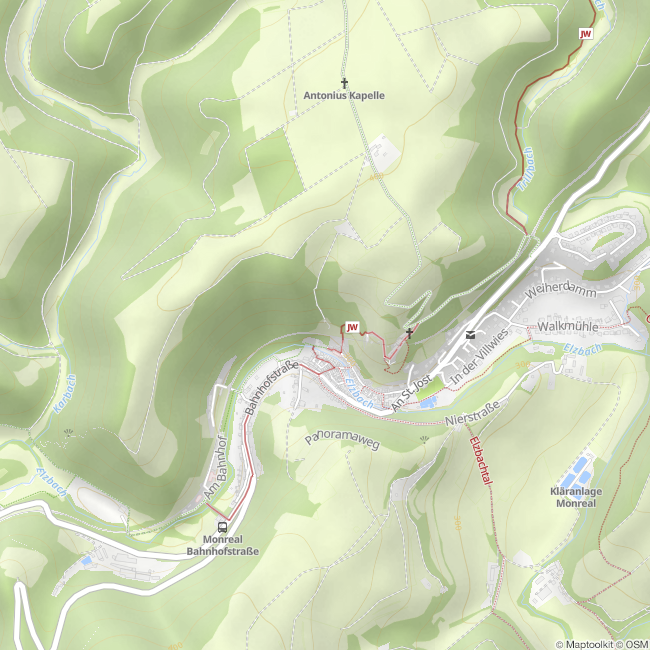
The neighboring ruins of Löwenburg—also known as Monreal Castle—and Philippsburg—commonly called “das Rech” (Reh)—tower majestically over the half-timbered village of Monreal, idyllically situated in the Elzbach Valley, on a 350-meter-high mountain spur.
Löwenburg
Löwenburg, situated above the half-timbered village of Monreal, is a so-called spur castle and was first mentioned in a document in 1229.
Count Hermann III of Virneburg is considered the builder of Löwenburg. According to tradition, he is said to have built the complex on land belonging to his brother Philipp following a partition agreement. The resulting disputes between the brothers were later settled, however, and Philipp ceded his rights to the region to his brother.
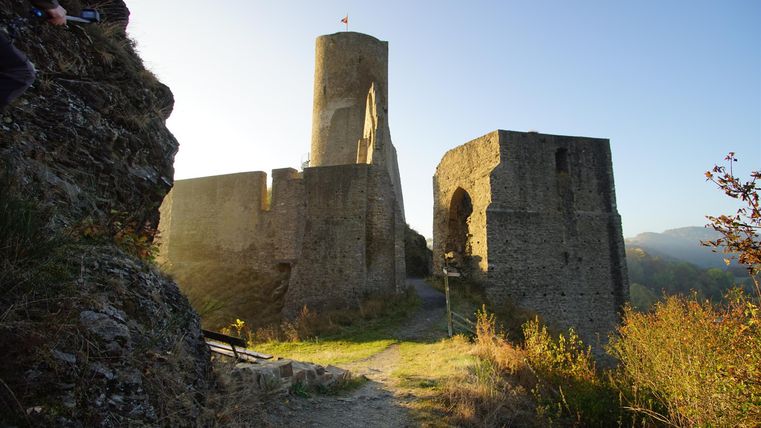
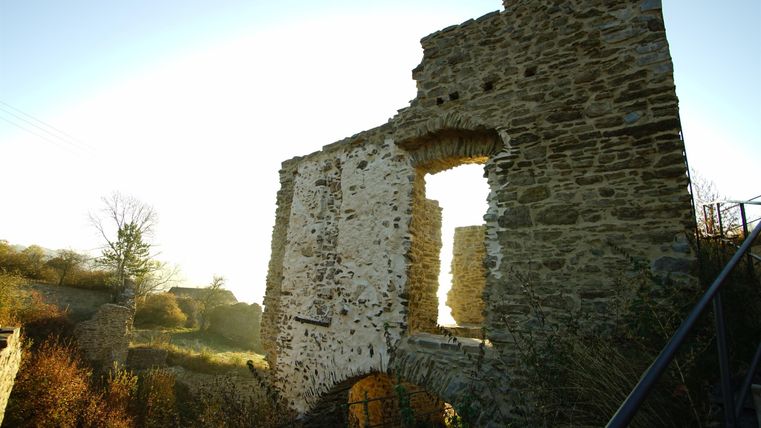
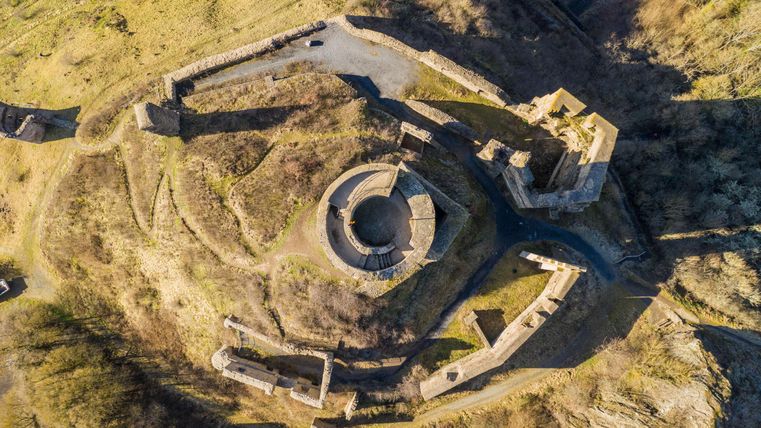
Today, large sections of Löwenburg Castle remain, offering a good impression of just how imposing the castle’s appearance must once have been. Most notably, the remains of the 25-meter-high keep, with its three-meter-thick walls, are visible from afar. The high entrance to the imposing keep faces the valley—a strategically advantageous position on the side facing away from the enemy.
Unfortunately, the castle tower is currently closed and inaccessible.
Philippsburg
Philippsburg in Monreal was also built in the 13th century. Philippsburg earned the colloquial nickname “Rech” (Reh) due to its smaller size compared to Löwenburg.
There are two different theories regarding its origins: On the one hand, Philippsburg is said to have been built merely as a forward or outer fortification of Löwenburg; on the other hand, it may have been Philip’s “response” to his brother’s unauthorized construction of Löwenburg.
Several substantial sections of the Philippsburg’s walls—including the northwest tower and the restored south wall—have also survived, providing a good impression of the original complex.
Historical Development
The Counts of Virneburg maintained good relations with the Electorate of Cologne. As a result of this—and due to the raids by Heinrich II of Virneburg on the Electorate of Trier’s town of Mayen—a feud developed between the Archbishop of Trier and the Counts of Virneburg. Following the intervention of the Archbishop of Cologne, it was therefore agreed that Heinrich II would be granted Löwenburg in Trier as a fief upon the death of his father, Robert III of Virneburg.
Between 1384 and 1445, when Robert IV of Virneburg was the lord of Monreal, the complex was further expanded and served, among other things, as the widow’s residence of the count’s family during the 14th and 15th centuries. The ancestral castle of the Counts of Virneburg in Virneburg itself had already been replaced by Monreal as the main seat of power by the beginning of the 16th century.
In 1545, the Virneburg line died out with the last count, Cuno, and Heinrich von Leiningen succeeded him as vassal. After 1555, however, the fief was not re-granted, and the Elector of Trier appointed his own bailiff.
During a futile attempt to defend the town against Swedish troops, the fortifications sustained heavy damage in 1632 and were finally destroyed by French troops in 1689 during the War of the Palatinate Succession.
In 1815, the two castle ruins in Monreal became state property until the current General Directorate for Cultural Heritage of Rhineland-Palatinate (GDKE) became the owner.
Impressions
Copyright: Foto: Laura Rinneburger, Quelle: Touristik-Büro Vordereifel Copyright: Foto: Laura Rinneburger, Quelle: Touristik-Büro Vordereifel Copyright: Eifel Tourismus GmbH, D. Ketz Copyright: Foto: Laura Rinneburger, Quelle: Touristik-Büro Vordereifel Copyright: Foto: Laura Rinneburger, Quelle: Touristik-Büro Vordereifel Copyright: Foto: Svenja Schulze-Entrup, Quelle: Touristik-Büro Vordereifel Copyright: Eifel Tourismus GmbH, D. Ketz
Contact
Fachwerkdorf Monreal
Marktplatz
56729 Monreal