Copyright: Eifel Tourismus GmbH, D. Ketz
Genoveva cave
Kordel
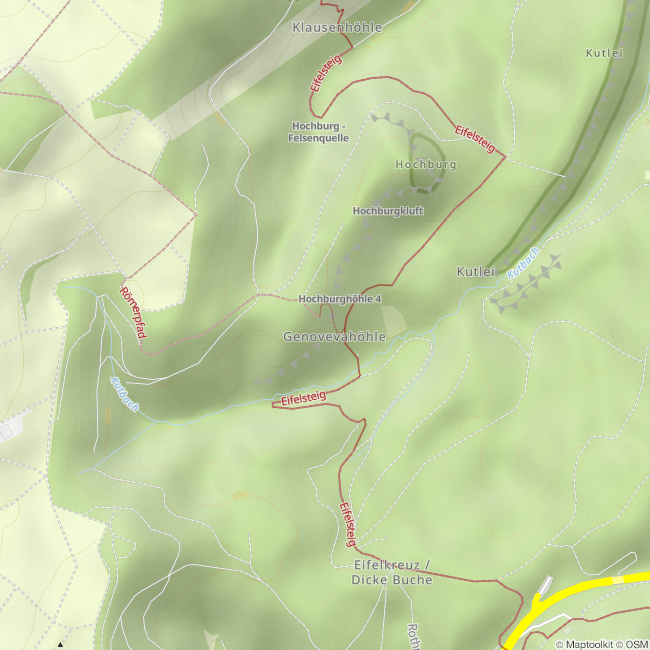
You’ll come across the legendary cave, which has offered people shelter and refuge for millennia, on a hike along Eifelsteig or Römerpfad.
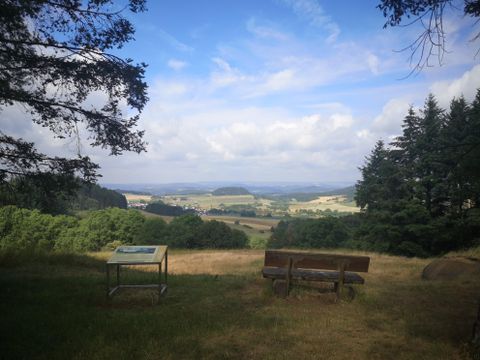
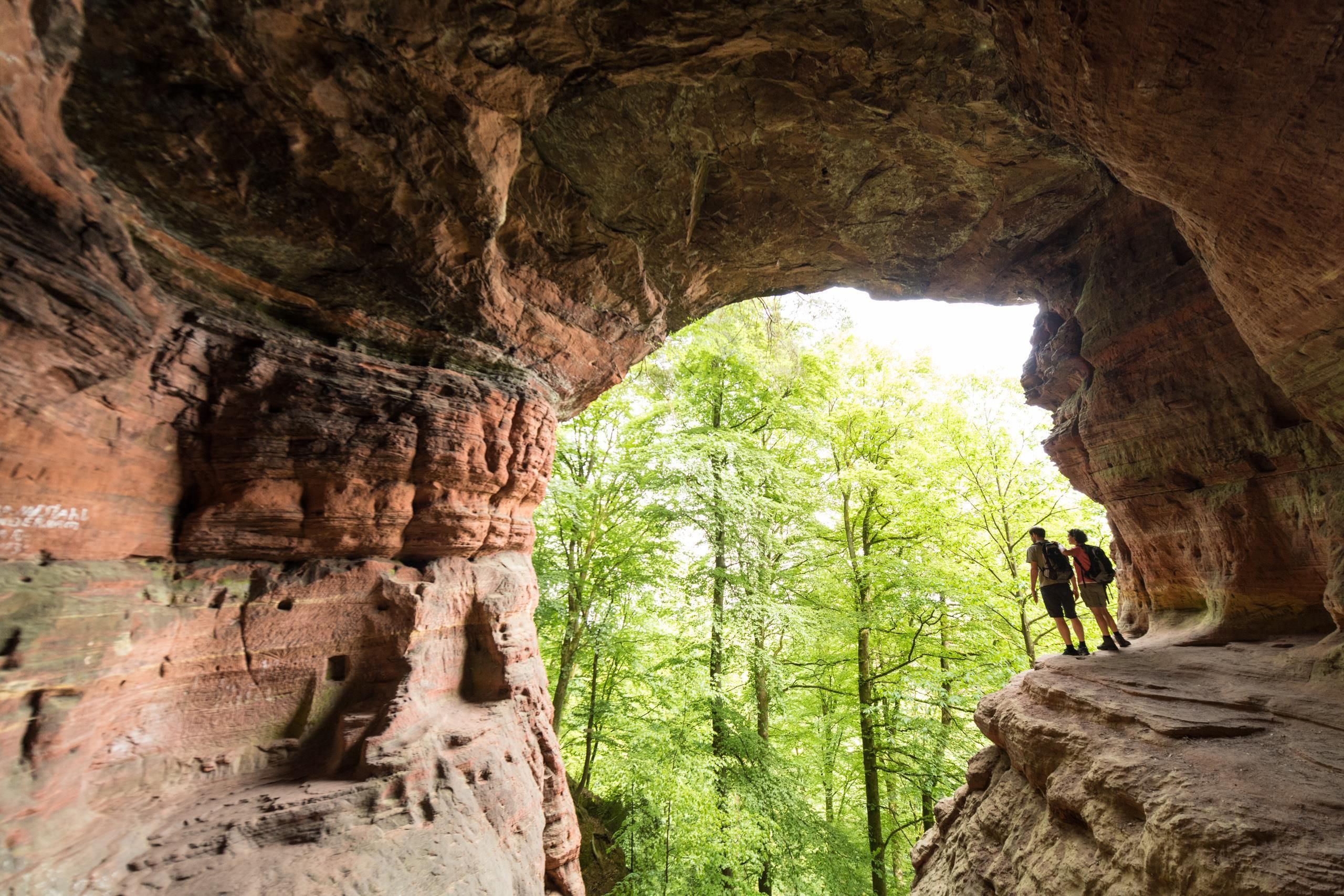
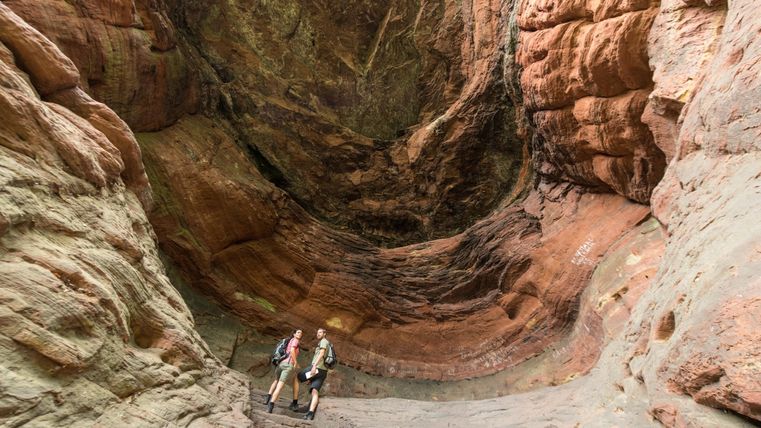
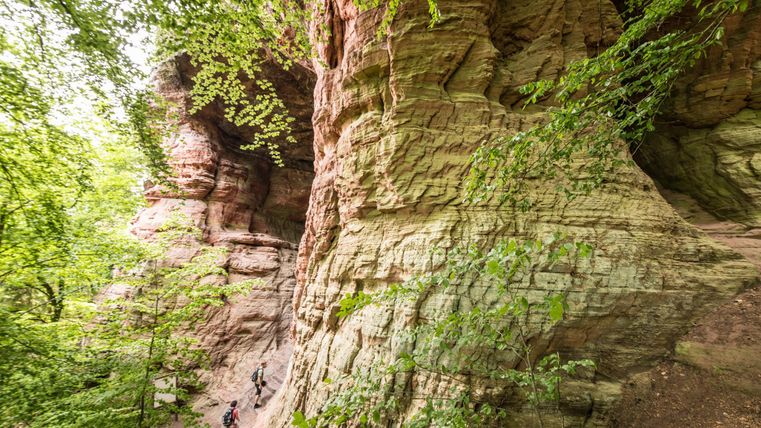
South of Kordel in the Kyll Valley lies the imposing and legendary Genoveva Cave, high above the Kuttbach Valley. Today, the premium hiking trails Eifelsteig and Römerpfad guide hikers to this once-hidden spot in the middle of the forest. Millions of years ago, water erosion, wind erosion, and frost action carved this shell-shaped cave out of the massive Bund sandstone.
The rock formation provided people with shelter from all manner of natural dangers—presumably for thousands of years. This is evidenced by finds ranging from the Paleolithic era to Roman-era pottery shards and medieval and even modern-day ceramics. People built small huts inside the cave. In the past, this terraced natural structure could only be reached via ladders, ropes, or climbing poles—which also protected the inhabitants from wild animals.
The cave’s widest point is about 15 meters, and the ceiling is approximately 8–10 meters above the floor. The steps leading to the cave were not carved into the rock until 1910 by the Eifelverein. While taking a break on the rock terraces , you can experience that sense of shelter for yourself.
Caves have always had a mystical quality and have been the stuff of legends. And it is to one such legend that the Genoveva Cave owes its name. According to the legend, Count Palatine Siegfried is said to have married Genoveva, the daughter of the Duke of Brabant. When Siegfried returned from a war, the steward Golo accused the countess of infidelity. Genoveva was then to be put to death along with her son, but she managed to flee with the child into the woods, where the two led a miserable life under the shelter of this cave. Years later, the Count Palatine found them again during a hunt and, filled with remorse and joy, welcomed them back.
Contact
Deutsch-Luxemburgische Tourist-Information
Moselstr. 1
54308 Langsur