Copyright: Eifel Tourismus GmbH, Dominik Ketz
Caves and Gorges in the Eifel
Fascinating Rock Landscapes Shaped by Volcanism and the Ice Age
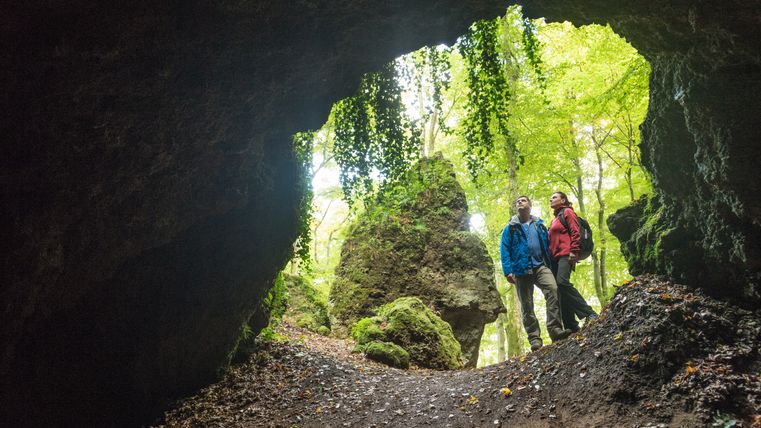
The Eifel is one of Germany’s most diverse low-mountain ranges. Shaped by volcanic activity, Ice Age processes, and millennia of erosion, it offers an impressive variety of rocks, gorges, and caves. Narrow rock crevices, moss-covered gorge forests, mysterious cave chambers, and towering rock formations make the region a unique natural experience—for hikers, families, and nature lovers alike.
Formation of the Rock and Gorge Landscape
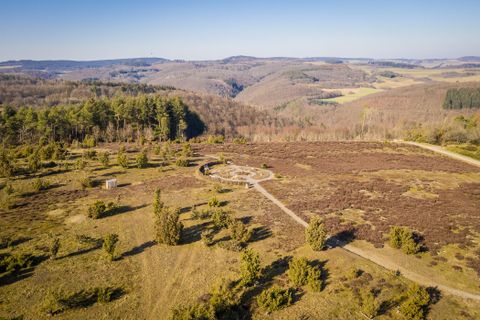
The Eifel’s current landscape is the result of various geological processes. In the Volcanic Eifel, basalt domes, lava rocks, and tuff bear witness to the region’s volcanic past. In other parts, particularly in the Southern Eifel, sandstone and limestone formations dominate the landscape.
Many gorges were formed by the interaction of water, frost, and rock: During the last Ice Age, the freeze-thaw cycle shattered sections of rock, while streams cut deeply into the rock, forming narrow V-shaped valleys and canyon-like gorges. This gave rise to impressive rocky landscapes with narrow crevices, steep walls, and valley floors strewn with boulders.
Impressions
Copyright: Eifel Tourismus GmbH, Dominik Ketz Copyright: Eifel Tourismus GmbH, Dominik Ketz Copyright: Eifel Tourismus GmbH, Dominik Ketz Copyright: Eifel Tourismus GmbH, Dominik Ketz Copyright: Eifel Tourismus GmbH, Dominik Ketz Copyright: Eifel Tourismus GmbH, Dominik Ketz Copyright: Eifel Tourismus GmbH, Dominik Ketz Copyright: Eifel Tourismus GmbH, Dominik Ketz Copyright: Eifel Tourismus GmbH, Dominik Ketz
Exploring Gorges and Cliffs
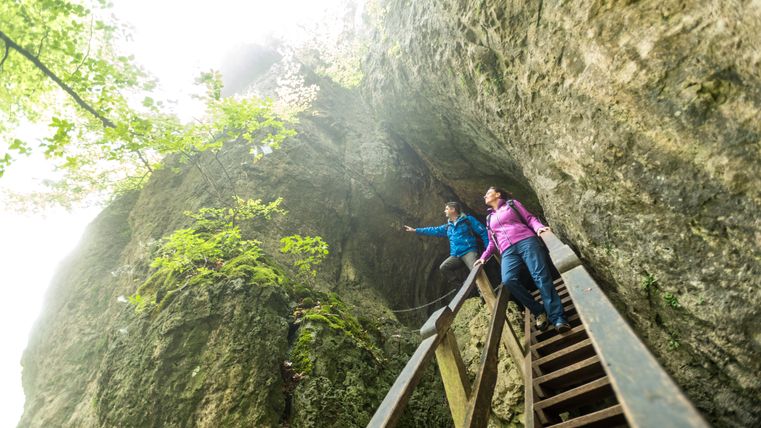
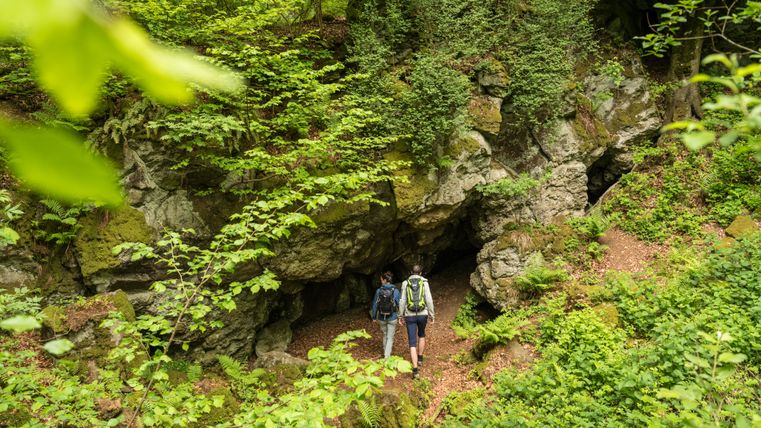
Rugged cliffs and narrow gorges make the Eifel a fascinating natural wonder. Shaped by volcanic activity, the Ice Age, and thousands of years of erosion, impressive rocky landscapes await you—from the spectacular Teufelsschlucht to striking dolomite and sandstone formations.
6 results
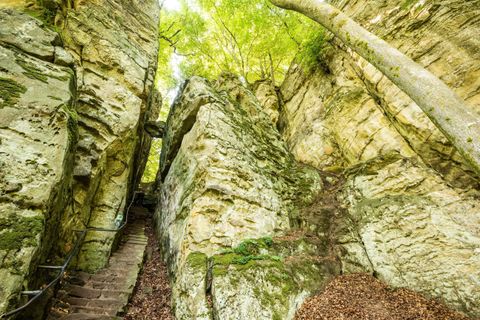
"Teufelsschlucht" (Devil's Gorge)
ErnzenOpen today
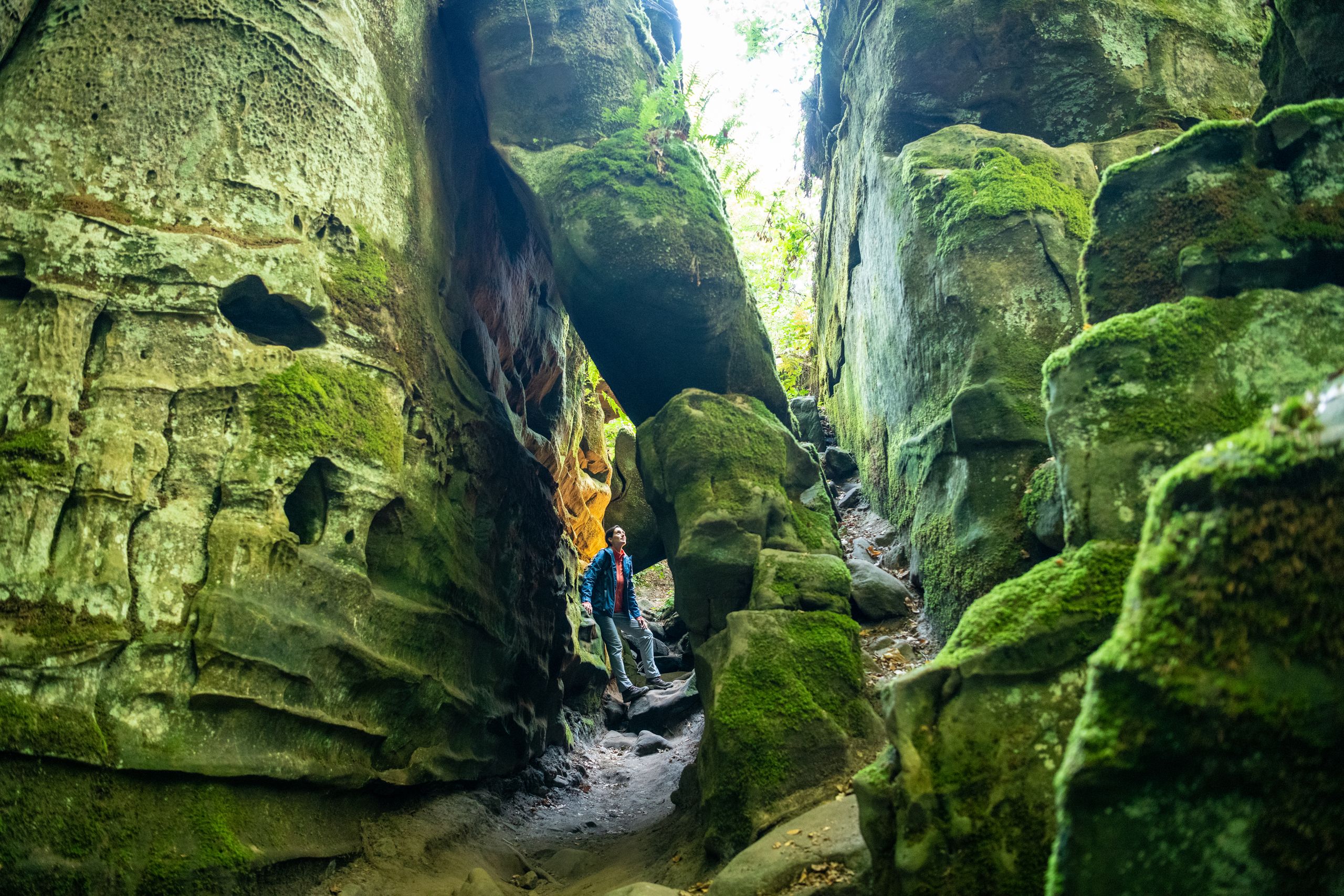
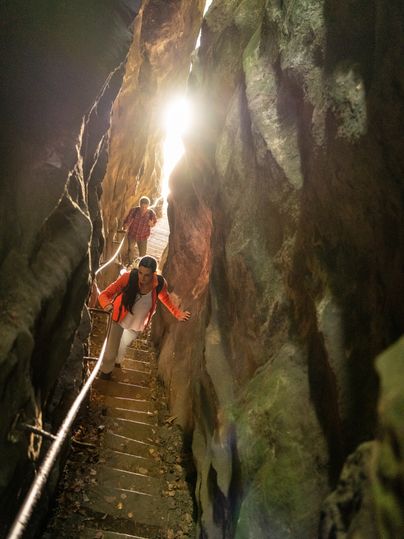
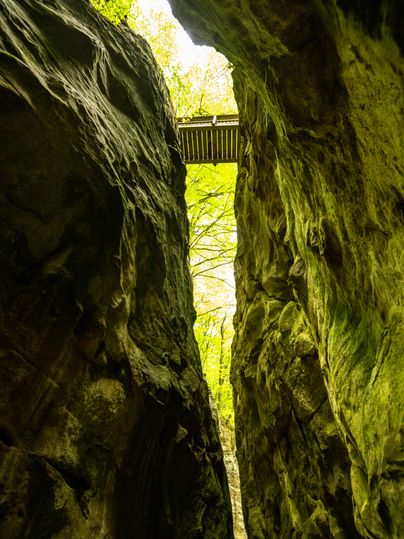
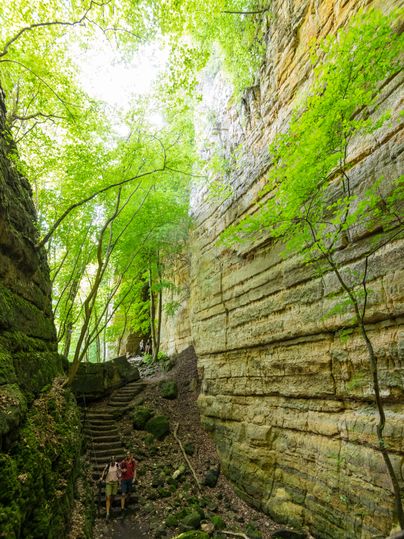
A natural monument of extraordinary fascination: a narrow gorge with metre-high rock faces, cool and dark. Cracks and crevices, weathered and overgrown with mosses and lichens. Anyone walking through this eye of a needle in the sandstone is walking through a 200-million-year-old seabed that harbours many secrets.
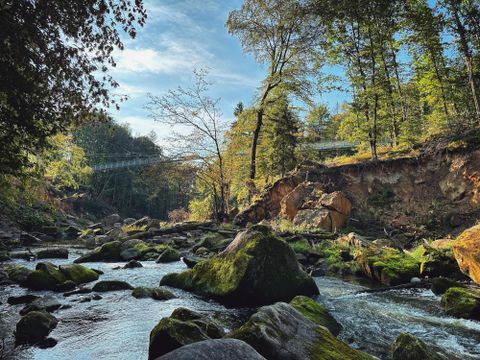
"Irreler Wasserfälle" (Waterfalls of Irrel)
IrrelOpen today
The rapids of the Prüm, known as the "Irrel Waterfalls", remain a fascinating natural spectacle even after the flood disaster of 2021. Crossing the river is once again possible via the new suspension bridge.
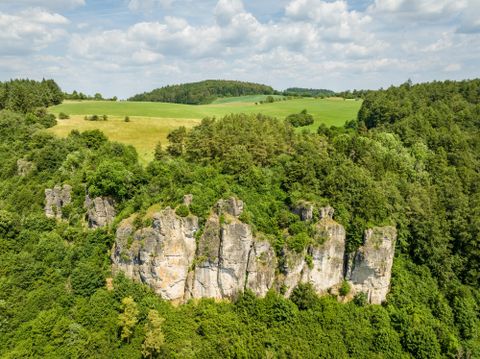
Gerolsteiner Dolomiten
GerolsteinOpen today
The rocks “Hustley”, “Munterley”, “Drohende Ley”, “Große Kanzel” and “Auberg” shape the cityscape from afar and form Gerolstein’s landmark. The most famous peak of the Gerolstein Dolomites is the "Munterley" - with an altitude of 482 meters.
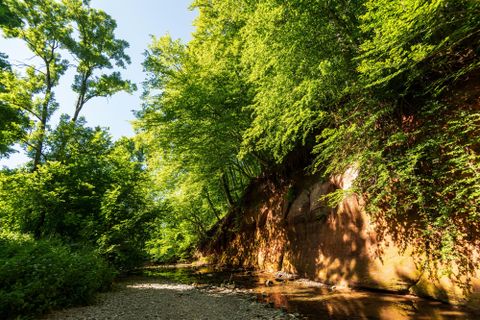
Roter Puhl
MettendorfOpen today
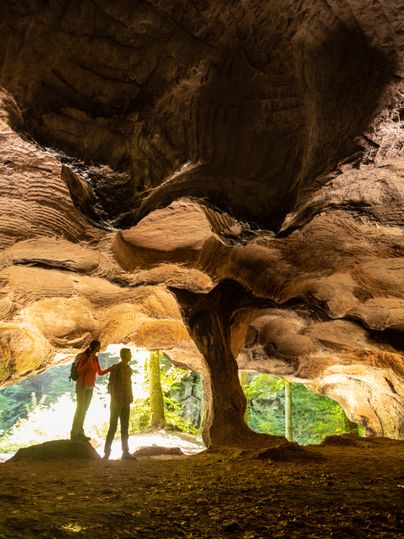
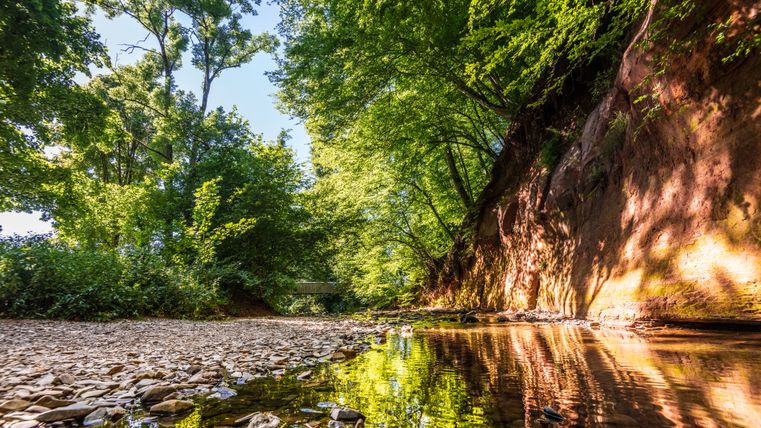
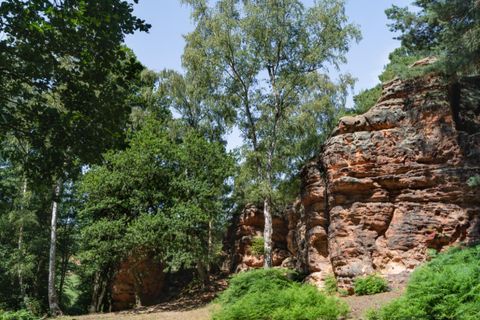
At the "Roter Puhl", the red sandstone slope on the Enz, the natural landscape presents itself in particularly impressive orange-glowing colours.
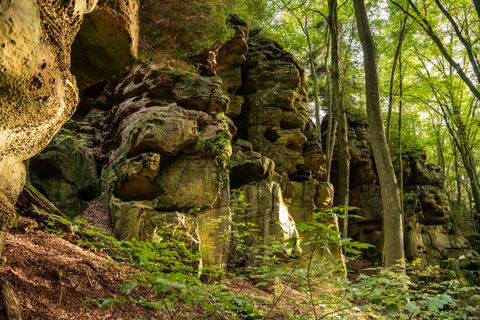
Schweineställe
ErnzenOpen today
A ravine called the "pigsty"? A strange name. But you can actually meet cheerful pigs here - and a mysterious, possibly millennia-old inscription!
Katzensteine
MechernichOpen today
In the "Mechernich Forest", which extends from the eastern city limits of Mechernich to Satzvey, the Katzensteine rise on the border with the Veybachaue near Katzvey.
Explore Caves
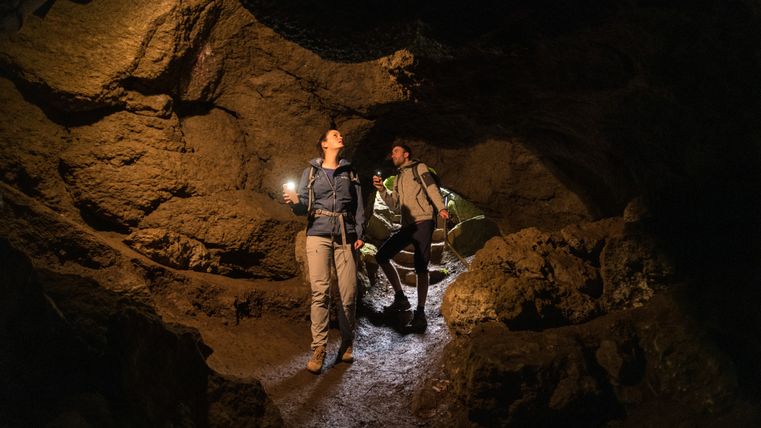
The caves of the Eifel tell the story of volcanism, geological history, and thousands of years of human use. Unlike traditional stalactite cave regions, the Eifel is best known for its caves formed by basalt and millstone quarrying, though there are also natural limestone and dolomite caves such as the Kakushöhle and the Buchenlochhöhle.
12 results
The millstone caves of the Rother Kopf
GerolsteinOpen today
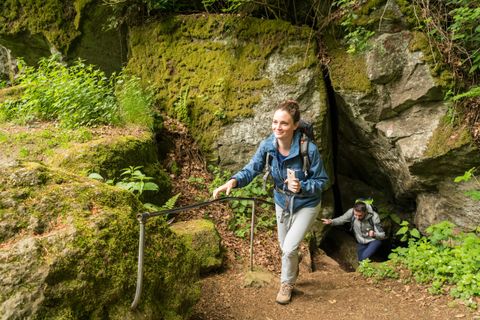
The millstone caves are located northwest of Gerolstein, between the districts Müllenborn and Roth. For those who want to get really deep insights into the interior of the volcano Eifel, a visit to the Mühlstein caves is a must.
Trasshöhlen
BurgbrohlOpen today
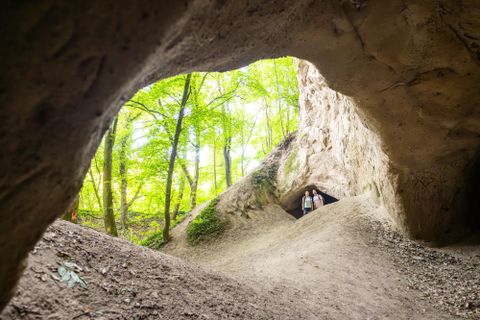
The sky in the Brohl valley darkened when the Laacher See volcano erupted just five kilometers away. The once loose materials from the glowing avalanche have caked over time to form a rock that is called “trass” in our region.
Do you have any more questions?
Among the best-known rocky regions are the Südeifel rock formations, including the Teufelsschlucht, the Katzensteine near Mechernich, and the dolomite cliffs in the Gerolstein region.
The Devil's Gorge near Ernzen is a rock crevice up to 28 m deep, featuring narrow passages, high sandstone walls, and bizarre weathering formations. It was formed, among other things, by freeze-thaw processes at the end of the last Ice Age, about 12,000 years ago.
The Eifel region is primarily composed of slate, greywacke, limestone, dolomite, quartzite, and volcanic rocks such as basalt and tuff.
Yes, many of the hiking trails in the NaturWanderPark delux are characterized by rocky terrain.
Whether you combine it with a hike or just go on a day trip, there are many caves to explore in the Eifel.