
Nationaler Geopark Laacher See
Maria LaachOpen today
The Laacher See National Geopark encompasses the geologically significant volcanic landscape of the Eastern Eifel surrounding Lake Laach, the largest lake in Rhineland-Palatinate.
The Laacher See National Geopark encompasses the geologically significant volcanic landscape of the Eastern Eifel surrounding Lake Laach, the largest lake in Rhineland-Palatinate.
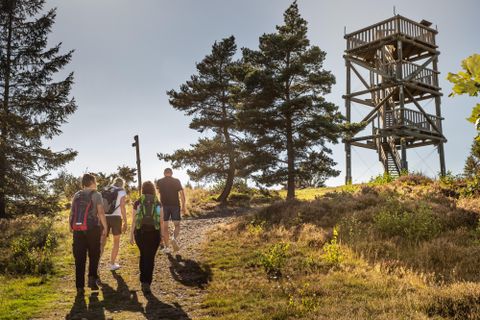
The observation tower on Weiselstein near Schalkenbach Nord offers a wonderful view over the juniper heath.
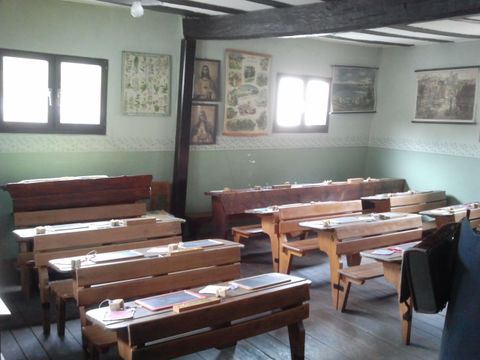
The school museum Immerath is housed in a historical, half-timbered building originating from 1770, which served as a school until 1910. School development over the past 200 years is clearly documented here.
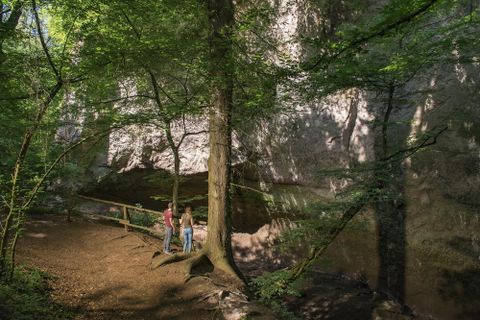
The wild and romantic Wolfsschlucht invites you to take a trip. The Tönissteiner Bach, which rises shortly after the village of Wassenach, first passes idyllically situated trout ponds, only to plunge several meters straight behind it and then meander wildly to find its way through volcanic ash to the Brohlbach.
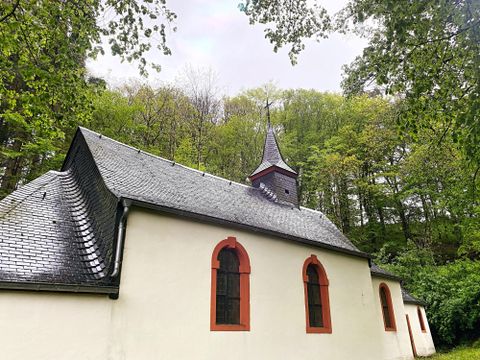
A baroque gem in the forest to the east of the town.
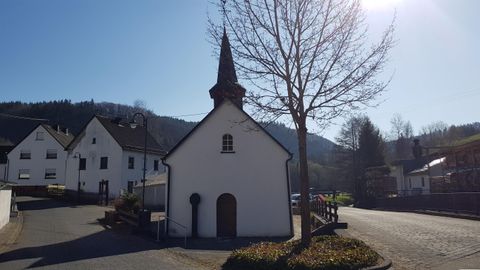
Today's St. Hubertus Chapel, built in 1826, is centrally located in the center of the community of Acht at the corner of Hauptstraße and Am Kirchweg. In recent years, the chapel has been lovingly restored as part of a large number of building measures and is now a neat eye-catcher in the middle of the village.
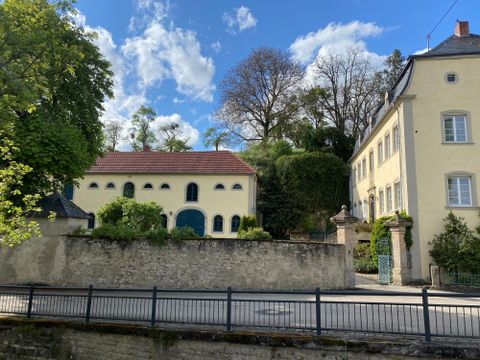
The glassworks was founded in 1796 by Johann Dominik Laeis. Around 50 people were employed here, producing glass balloons, window glass, bottles and fine crystal glass.
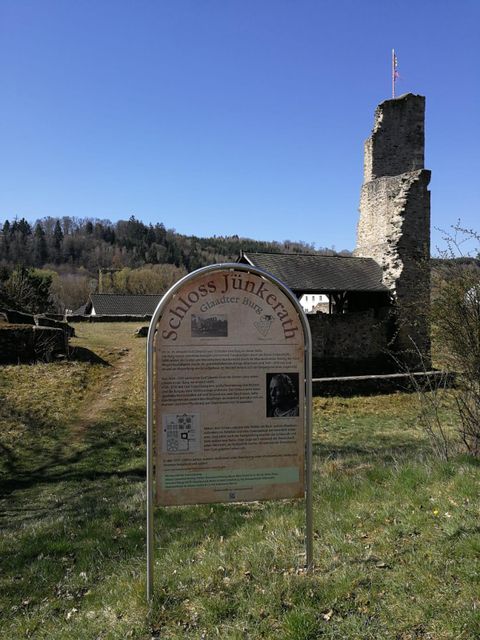
In the Middle Ages, Glaadt was even more important than Jünkerath, which at that time was only a hut settlement. For this reason, the counts of Blankenheim built a castle there in the 13th century, which was rebuilt into a magnificent hunting lodge at the beginning of the 17th century. However, a lightning strike in the 18th century caused it to burn to the ground.
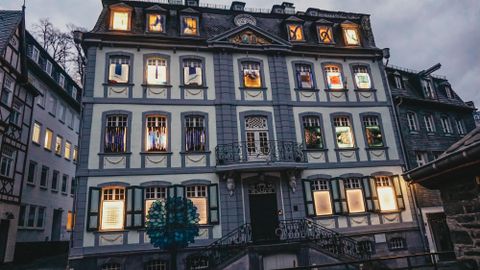
The Aachen master builder Couven erected the building in 1783 for the cloth manufacturer M.P.W. Troistorff, following the example of the town houses of the nobility. In keeping with the spirit of the times, the half-timbered house was plastered and decorated with ornamentation. Rich carvings on the doors with supraports and wrought ironwork on the staircase and balcony railings bear witness to the pomp and wealth of the residents.
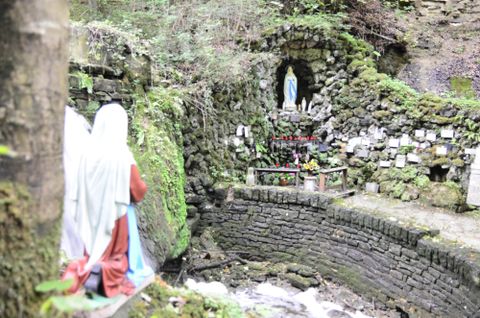
East of Bitburg, about 3 km away, lies the Albachtal in an idyllic limestone gorge. Stairs of natural stone (caution: danger of slipping) lead to the enchanted place of the Mariengrotte. Moss, ferns and clover line the path to the left and right. After a short time, the view of a waterfall and the Mariengrotte opens up.