Römermännchenstein
Stolberg
The Legend of the Quärrismännchen and the Quärrismännchen Stone
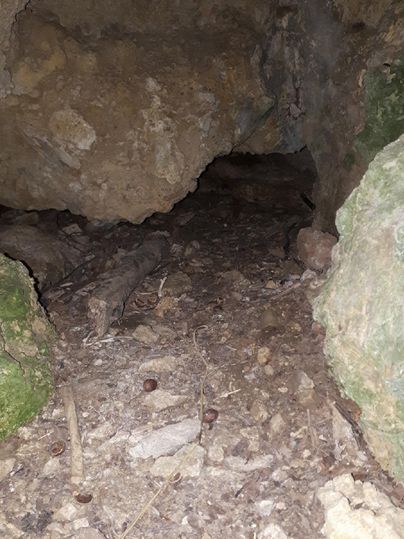
Long ago, the so-called Quärrismännchen lived around Diepenlinchen. It was said that they had dug tunnels into the rocks and lived inside them, emerging above ground only when necessary. They would borrow cooking and dining utensils from the people for their underground feasts, which they would then return scrubbed spotless. Even old and rusty utensils were polished so finely that they looked brand-new. But woe betide anyone who refused to lend them cooking and eating utensils: Then the Quärrismännchen would come at night to take what they needed, and by the next day, all the dishes in the house would be dirty or broken, and a great mess would have been made. Beyond that, they did not harm people, but they were not particularly useful either.
People, however, avoided the dwellings of the Quärrismännchen and their surroundings. Once the Quärrismännchen—who were also called Römermännchen—had moved on, a gang of ruffians took up residence in the tunnels, making the streets unsafe and forcing people to wall up the tunnel entrances and drive the ruffians away.
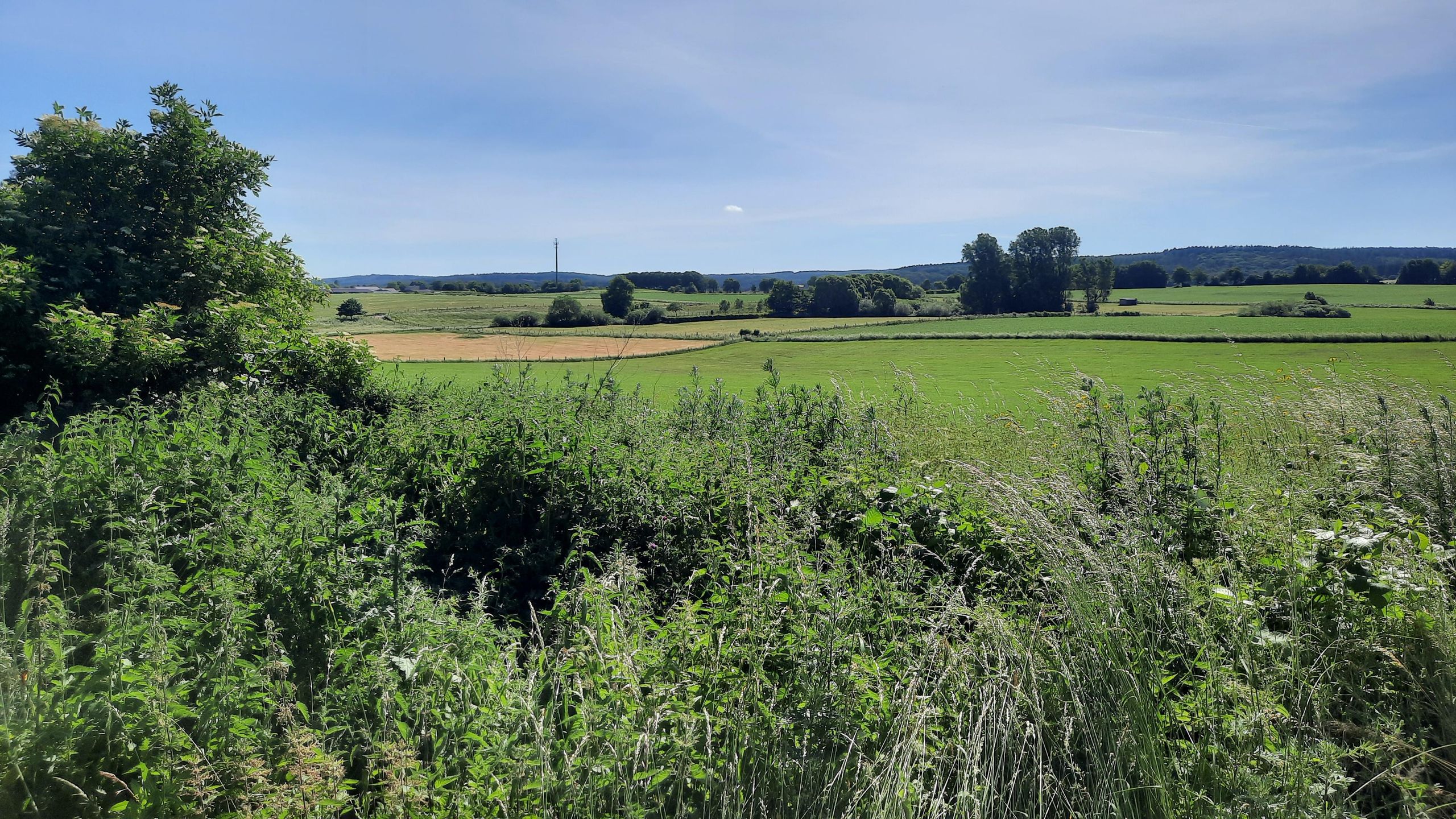
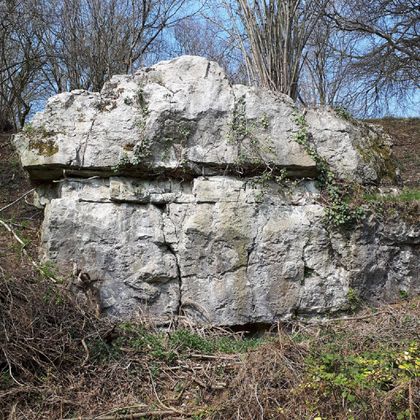
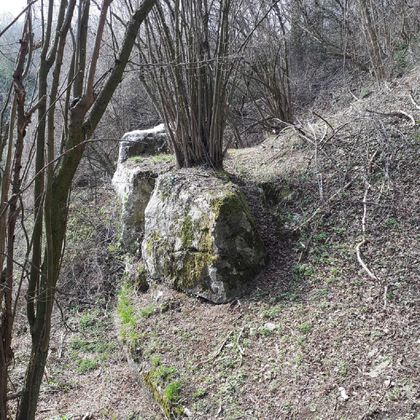
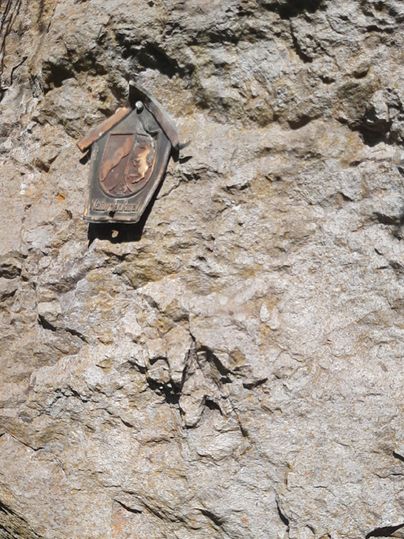
In the past, this valley hollow was therefore notorious, and not far from here stands a massive limestone boulder, of which it is said, “that’s where the Quärrismännchen are buried,” and the stone is said to mark their grave. In the past, if children wanted to tend livestock there, they were discouraged from doing so, as the place was eerie even during the day. Today, the rock is a registered archaeological monument and was spared by the quarry operation, thus preserving it.
Background of the Legend: It is unclearwhether the Quärrismännchen, as the core of the legend, represent a remnant of the belief in the Roman Penates (house spirits) or a memory of the Romans themselves. The word is derived from “Querge,” meaning “dwarves.” What is certain is that the legend is rooted in the memory of Roman mining.
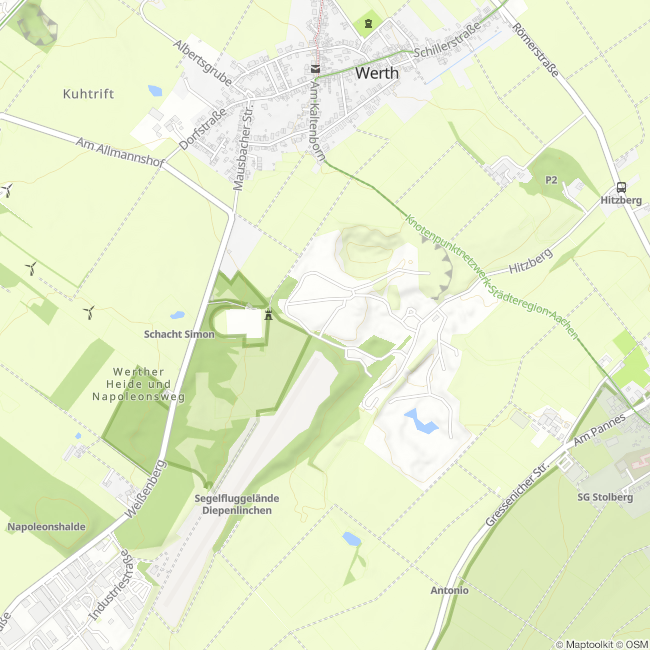
The fact that ancient mining took place in the Diepenlinchenbach valley is indicated even on old maps with the notation “alte Römerseifen” (ancient Roman mines). Starting at the “Gunsenbruch,” the ancient mining area extends all the way to the “Römerfeld” ore mine, located further down the valley. The Quärrismännchenstein marks the center of this field and, together with its distinctive shape, may have given rise to this legend.
(Text: Jens Mieckley, based on Heinrich Hoffmann; Source: *Zur Volkskunde des Jülicher Landes*, 1914)
This route was developed as part of the LEADER-funded project “Quality Initiative for Hiking in Roetgen and Stolberg” with support from the European Union (EAFRD) and the State of North Rhine-Westphalia.
Impressions

Contact
Montanhistorischer Rundweg
52224 Stolberg