Klärteiche
Stolberg
Ore Processing of the Diepenlinchen Mine
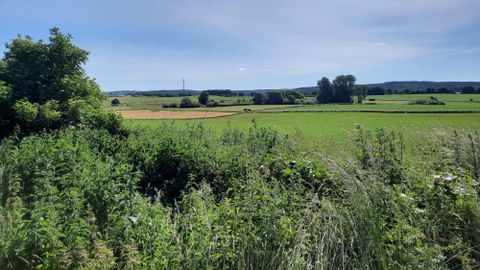
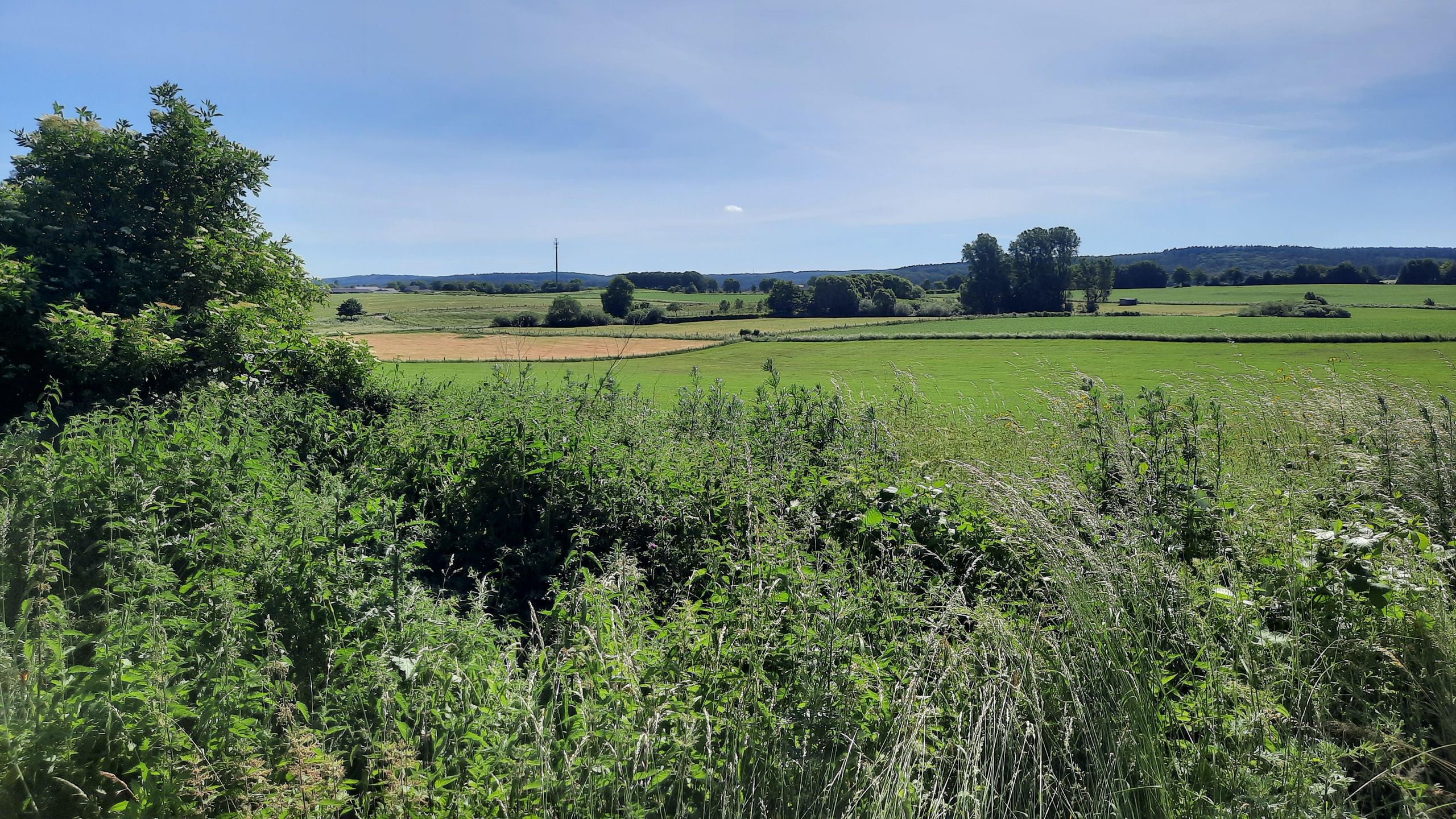
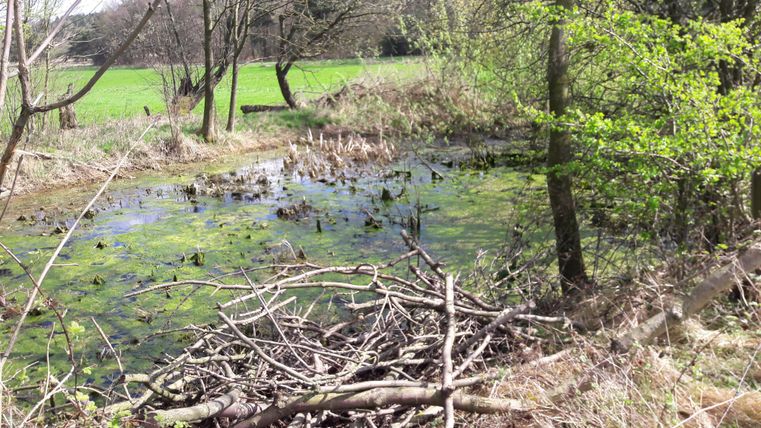
The ponds located on both sides of the path supplied water for the ore processing of the Diepenlinchen mine. As part of the processing of the extracted ore, both a separation of ore and barren rock materials had to be achieved, as well as a careful separation of the metal groups lead, iron, and zinc. The so-called "wet process" was applied at Diepenlinchen, which was very water-intensive. Since only minimal qualitative processing was possible at the beginning of mining, the spoil material still contained enough ore to make reprocessing the spoil heap profitable in addition to the daily extraction. Therefore, between 1906 and 1907, a new processing plant was constructed and put into operation. To wash the ores, the raised mine water was used, which only had to be lifted to the level of the water draining adit (Binsfeldhammer adit) in order to be drained into the Vicht via a 2,400 m long adit. On average, 9,000 liters per minute were lifted. However, about 2,000 liters per minute were lifted an additional 90 meters to the surface for use in ore washing. Since the processing facility required double the amount of water but was only in operation for 10 hours a day, these two ponds were created to collect the missing water outside of operating hours. The ore washing could process 257 tons of bulk material from the old spoil heaps daily.
Wet Process: When extracting the zinc blende, the challenge was to separate the individual ores (mainly zinc sulfide, lead sulfide, and iron sulfide) from one another, as the extracted zinc blende consisted of all three ores in close layering. For further processing in the zinc and lead smelters, a pure ore product was necessary. For this purpose, the ore bodies were finely crushed and separated from each other under a water stream using their different specific weights in an inclined trough with embedded depressions. The same process is still used today for gold extraction from gravel.
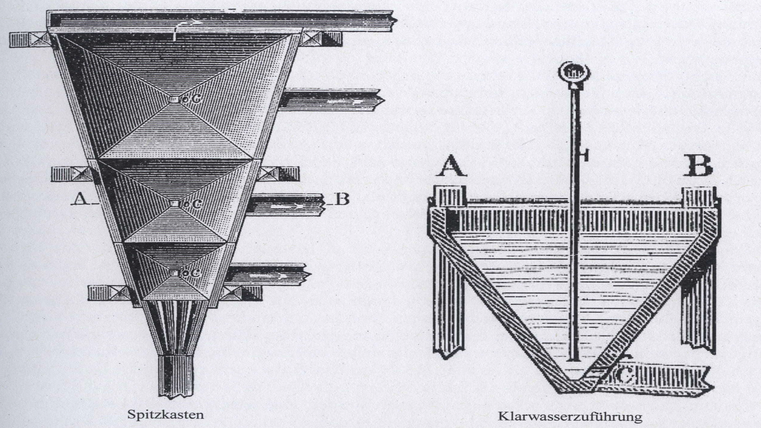
To make the separation and sorting even more efficient, so-called sand cone apparatus were used at Diepenlinchen. In this case, the slurry (the water-silt mixture) was introduced into the sand cone apparatus, which is an arrangement of several pyramidal hoppers of increasing size placed one behind the other. In the first (smallest) cone, the particles with the highest specific weight settle, and in the subsequent ones, the particles with decreasing specific weight.
For particularly fine sands, water pipes are additionally lowered almost to the bottom of the boxes, where clear water is introduced, allowing only the corresponding particles to fall to the bottom due to its pressure. Any lighter particles that may be carried along are flushed upward and into the next compartment, where the process is repeated. The washed and sorted ore could be removed through openings at the bottom of the box that could be closed with sliders.
(Text: Jens Mieckley)
Impressions

Contact
Montanhistorischer Rundweg
52224 Stolberg