Copyright: Jengel
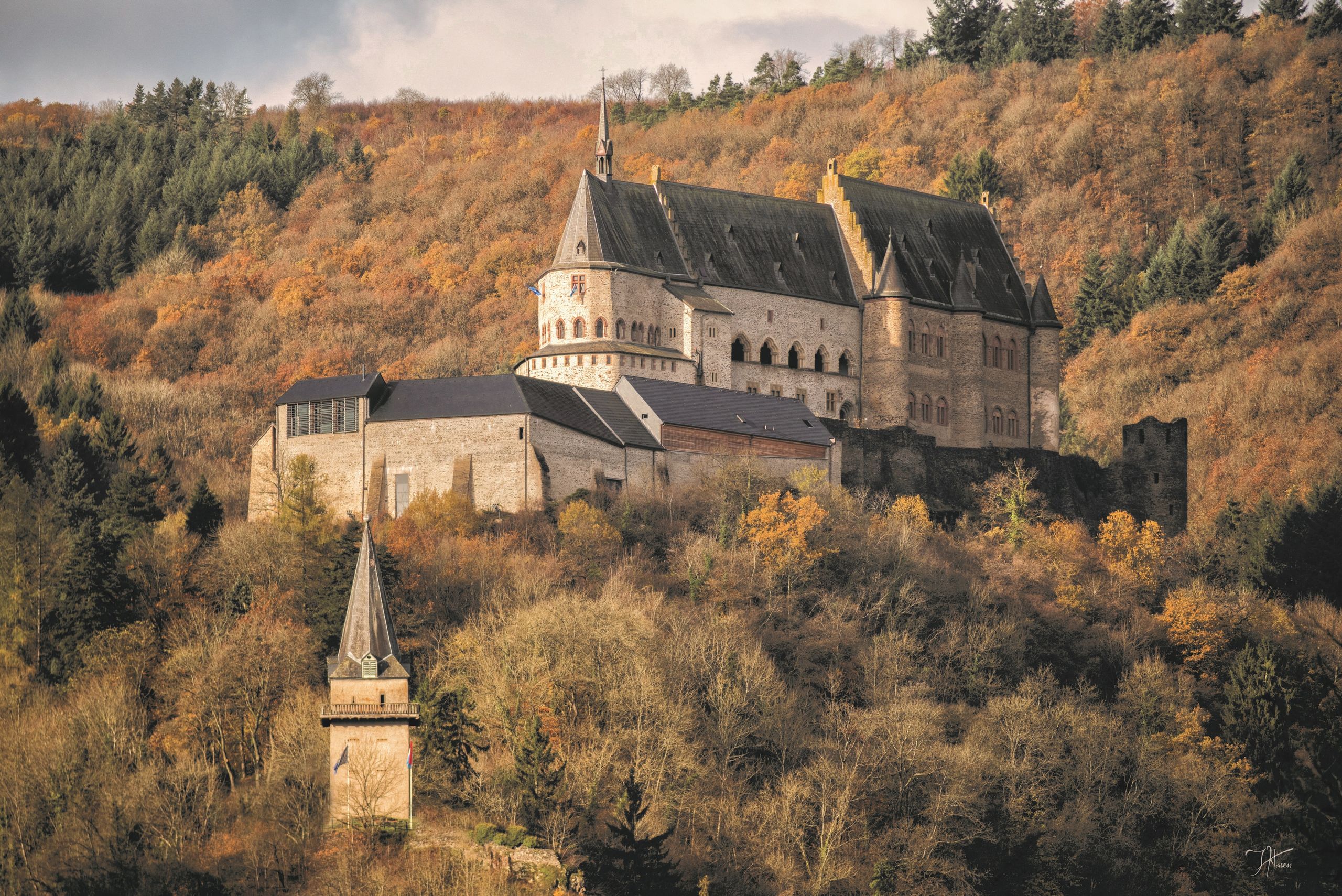
Vianden Castle
The visitor center at Vianden Castle vividly illustrates the different eras of construction and use. Visitors can walk through the centuries of the castle's history on a staged path. Visible fragments such as battlements, foundations and historic masonry are impressively highlighted by light and graphic displays. The exhibition is based on extensive research by historians, architects and archaeologists. The experience is complemented by a large-format film that uses 3D laser scanning and virtual reconstruction to vividly visualize the construction phases of the castle.
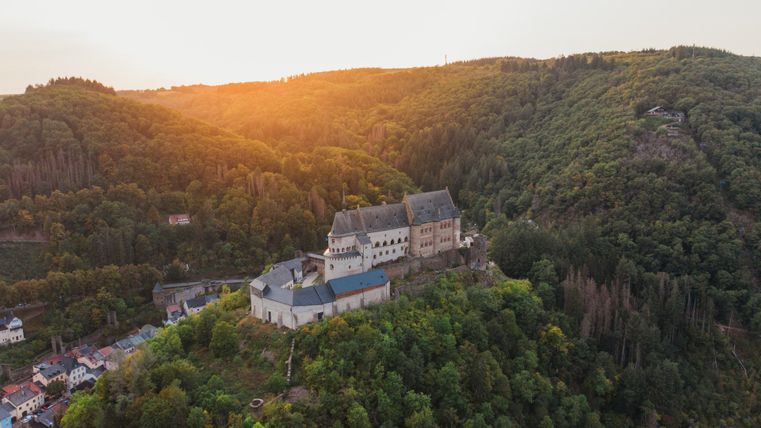
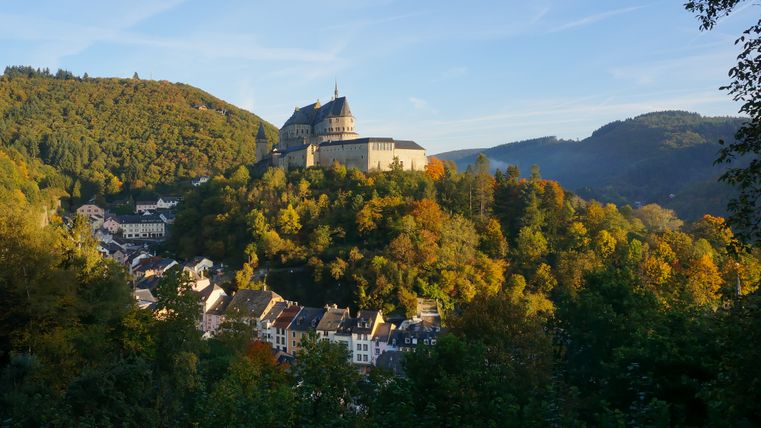
Vianden Castle was built between the 11th and 14th centuries on the foundations of a Roman fort and a Carolingian refuge. Influenced by the Hohenstaufen family, the castle palace is one of the largest and most beautiful feudal residences of the Romanesque and Gothic periods in Europe.
Until the 15th century, it was the residence of the powerful Counts of Vianden, who prided themselves on their connections to the German imperial court and whose most important count, Henry I (1220-1250), was married to a blood relative of the Capetians, the Queen of France.In 1417, the county and the castle were inherited by the younger line of the German House of Nassau, which also incorporated the French Principality of Orange in 1530.
The chapel, the small Pallas and the large Pallas, the most remarkable rooms in the castle, were built towards the end of the 12th century and during the first half of the 13th century. The Jülich building to the west of the large Pallas (which no longer exists today) dates back to the beginning of the 14th century, while the Nassau building was not erected until the beginning of the 17th century.
In 1820, under the reign of King William I of the Netherlands, Prince of Orange-Nassau, Count of Vianden, the sale of the castle and the subsequent dismantling into its individual parts left it in a state of ruin. In 1890, the castle fell to Grand Duke Adolf, the elder line of the House of Nassau, and remained in the possession of the Grand Ducal family. After the castle became state property in 1977, it was restored to its former splendor and is now one of the most important architectural monuments in Europe.
Further information
| Monday | 10:00 - 16:00 |
|---|---|
| Tuesday | 10:00 - 16:00 |
| Wednesday | 10:00 - 16:00 |
| Thursday | 10:00 - 16:00 |
| Friday | 10:00 - 16:00 |
| Saturday | 10:00 - 16:00 |
| Sunday | 10:00 - 16:00 |
| Holiday | 10:00 - 16:00 |
| Monday | 10:00 - 17:00 |
|---|---|
| Tuesday | 10:00 - 17:00 |
| Wednesday | 10:00 - 17:00 |
| Thursday | 10:00 - 17:00 |
| Friday | 10:00 - 17:00 |
| Saturday | 10:00 - 17:00 |
| Sunday | 10:00 - 17:00 |
| Holiday | 10:00 - 17:00 |
| Monday | 10:00 - 18:00 |
|---|---|
| Tuesday | 10:00 - 18:00 |
| Wednesday | 10:00 - 18:00 |
| Thursday | 10:00 - 18:00 |
| Friday | 10:00 - 18:00 |
| Saturday | 10:00 - 18:00 |
| Sunday | 10:00 - 18:00 |
| Holiday | 10:00 - 18:00 |
| Monday | 10:00 - 17:00 |
|---|---|
| Tuesday | 10:00 - 17:00 |
| Wednesday | 10:00 - 17:00 |
| Thursday | 10:00 - 17:00 |
| Friday | 10:00 - 17:00 |
| Saturday | 10:00 - 17:00 |
| Sunday | 10:00 - 17:00 |
| Holiday | 10:00 - 17:00 |
| Monday | 10:00 - 16:00 |
|---|---|
| Tuesday | 10:00 - 16:00 |
| Wednesday | 10:00 - 16:00 |
| Thursday | 10:00 - 16:00 |
| Friday | 10:00 - 16:00 |
| Saturday | 10:00 - 16:00 |
| Sunday | 10:00 - 16:00 |
| Holiday | 10:00 - 16:00 |
| Monday | 10:00 - 16:00 |
|---|---|
| Tuesday | 10:00 - 16:00 |
| Wednesday | 10:00 - 16:00 |
| Thursday | 10:00 - 16:00 |
| Friday | 10:00 - 16:00 |
| Saturday | 10:00 - 16:00 |
| Sunday | 10:00 - 16:00 |
| Holiday | 10:00 - 16:00 |
Contact
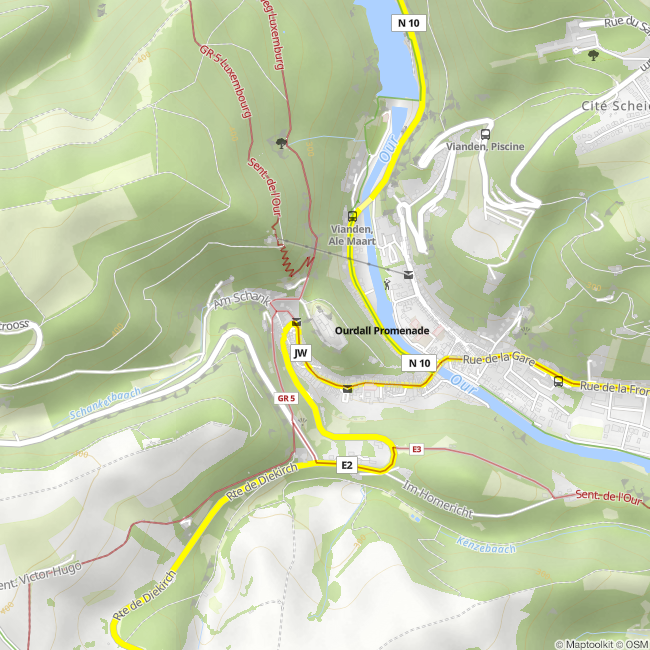
Burg Vianden
Montée du Château
9408 Vianden