
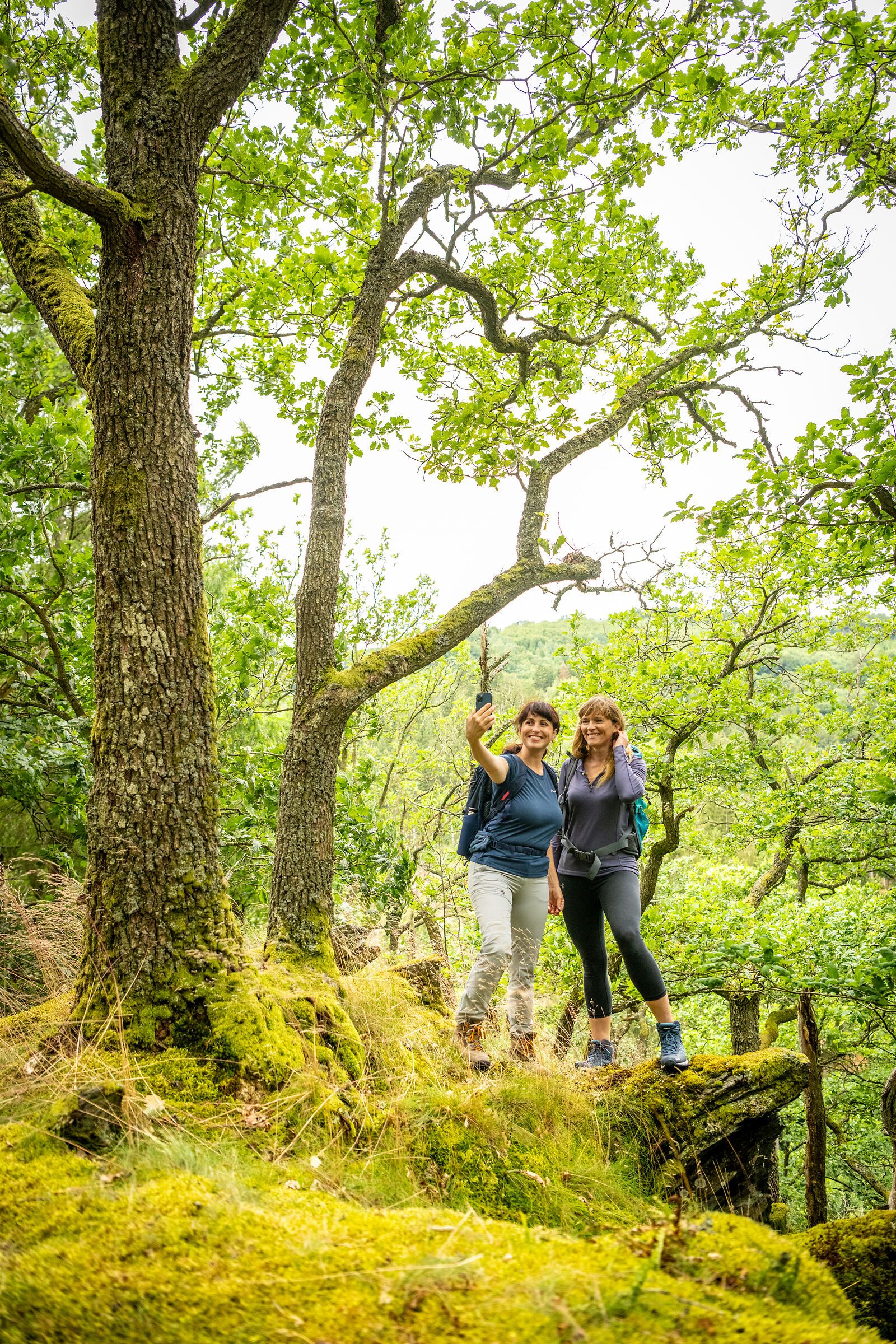
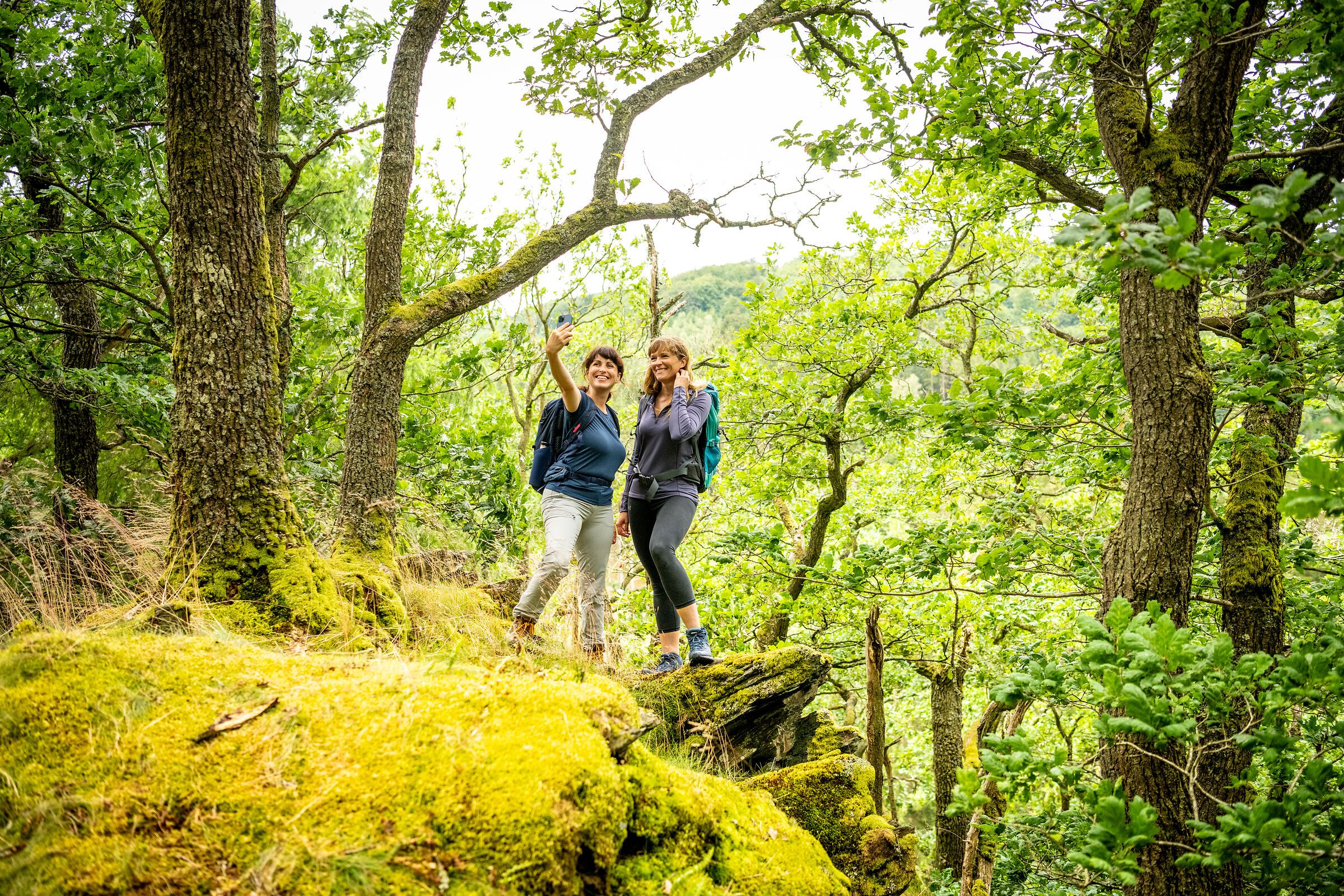
In the Eifel, every path leads you not only through breathtaking landscapes, but also through centuries of history, traces of ancient cultures and deep experiences of nature. Between volcanic rocks and gentle mountain ranges, quiet valleys and sunny juniper heaths lies your very own personal path - and you can now easily find it with the new hiking tour finder.
Whether cultural-historical, natural, sporty or meditative - each hiking route tells its own story. You decide what you want to discover: the rugged rock formations of the Devil's Gorge, the mighty reservoirs and the primeval forest of tomorrow in the Eifel National Park, the wide plateaus in the wild Islek, the powerful volcanic landscape or the rushing natural spectacle at the highest waterfall in the Eifel.
Plan individually. Experience it authentically. Immerse yourself deeply.
With just a few clicks, you can find the tour that suits your rhythm - by difficulty, length or theme.
The hiking tour finder is your compass for discovering the natural landscapes of the Eifel
Find a tour now and start hiking:
The Nideggen bathing forest and the Heimbach Meuchelberg: two natural treasures - each worth a hike in its own right - but something very special when combined.
Day hike approx. 10.6 km on the AhrSteig in combination with public transport (Laufenbacher Hof - Insul)
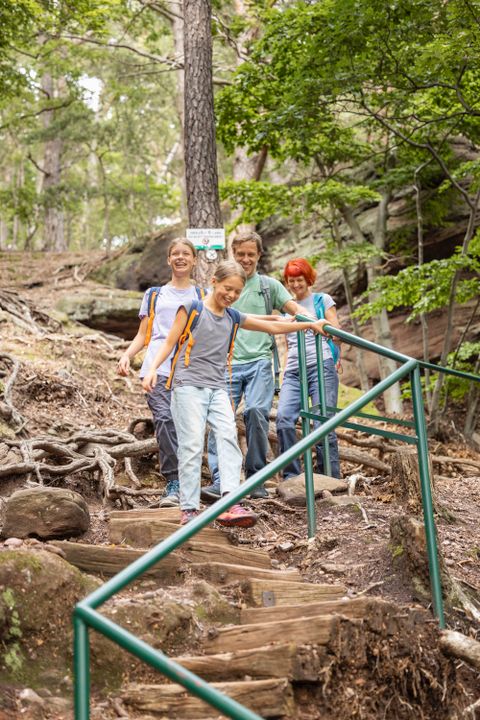
Discover the landscape of the red sandstone cliffs near Nideggen on the Effels circular hiking trail, LENI red. The hike is particularly suitable for families with children.
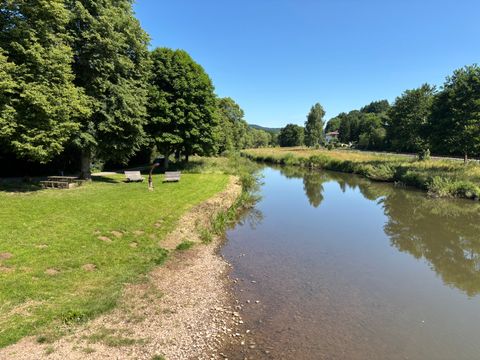
Where water touches the forest, this hike leads through the nature of the Eifel and invites you to relax.
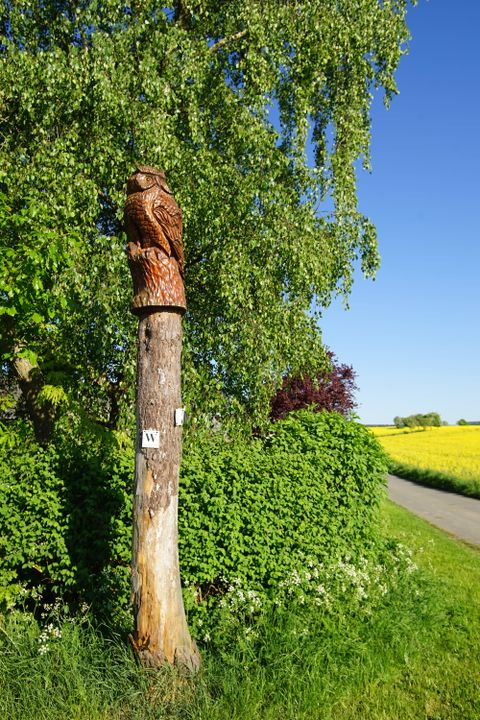
The Wiesbachtalweg is marked with a "W" and is a scenic circular hiking trail starting and finishing at the parish church of St. Kastor in Weiler.
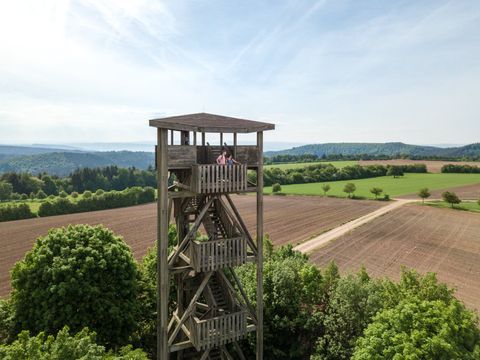
The stage 14 of the Eifelsteig leads from Bruch to Kordel.
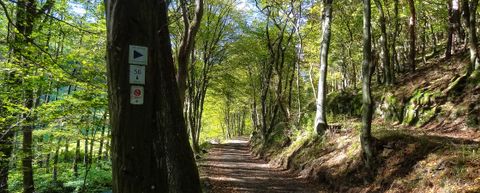
The watercourses and their floodplains are a typical and ecologically valuable part of the Rureifel with a great wealth of flora and fauna. This diversity is thanks to the farmers who have mowed the meadows for centuries. When modern forms of farming close to villages made haymaking in the valleys no longer worthwhile, spruce trees were planted there. Efforts are currently being made in many places to restore the original floodplain vegetation. The characteristic terracing can be seen in many places along the hiking trail. This occurs when a river is no longer able to transport its debris load and deposits it in the floodplain. If a river deepens again due to a change in climate, it cuts through the previously formed terrace. The formerly swampy valleys of the Eifel only acquired their function as traffic routes after the river regulation at the beginning of the 20th century.
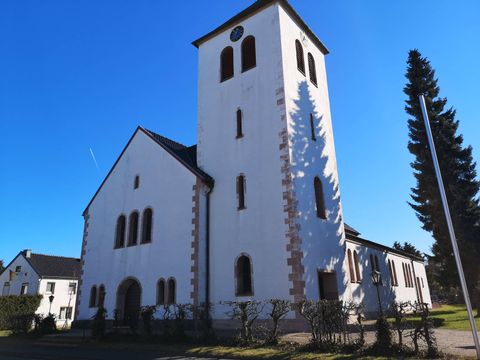
The 3.8 km circular trail shows all the special features of the village of Hergarten.