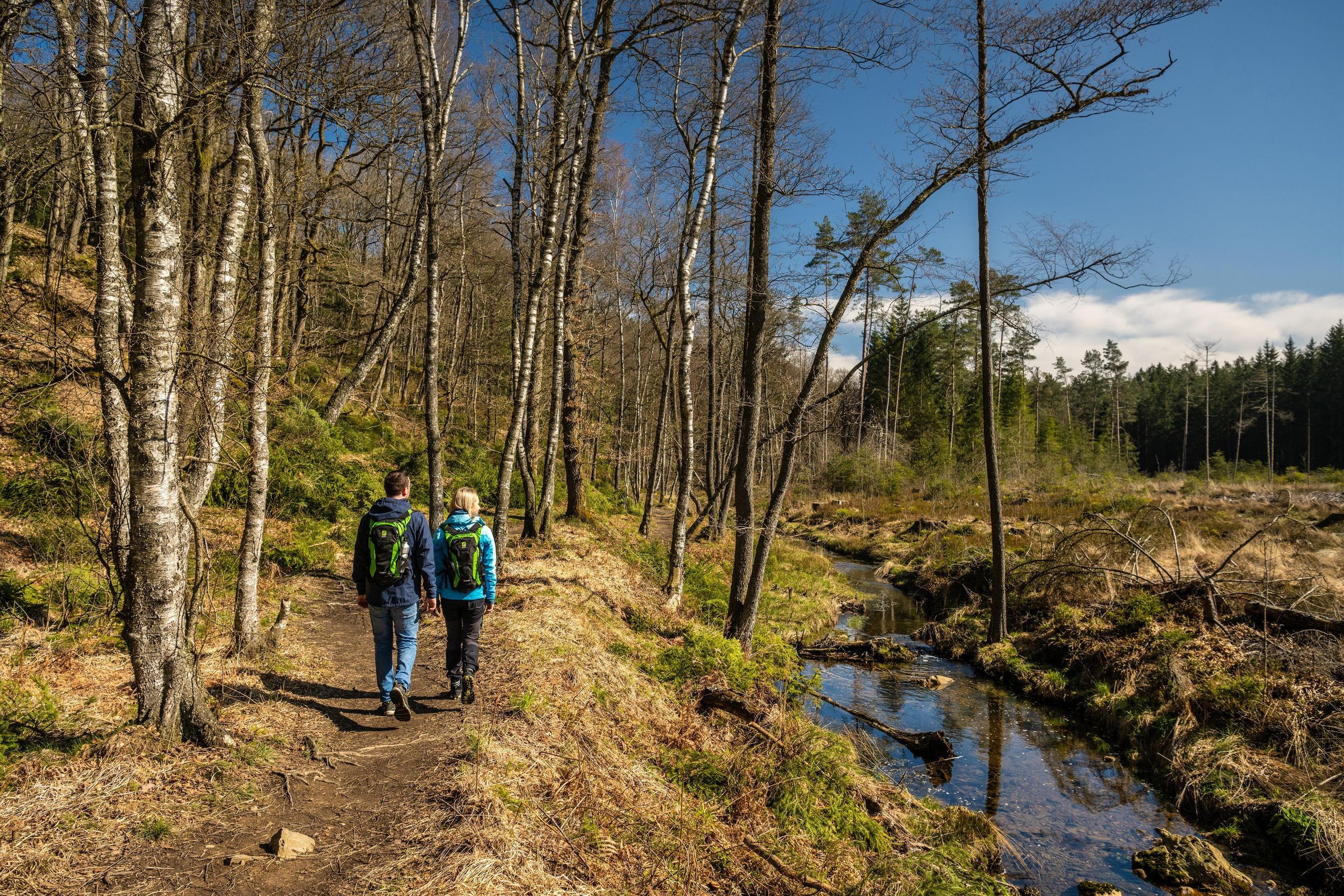
Copyright: Städteregion Aachen, Dominik Ketz
Der Schlangenberg – Riffe und Erze
Stolberg
Natural and industrial history meet at the Schlangenberg.
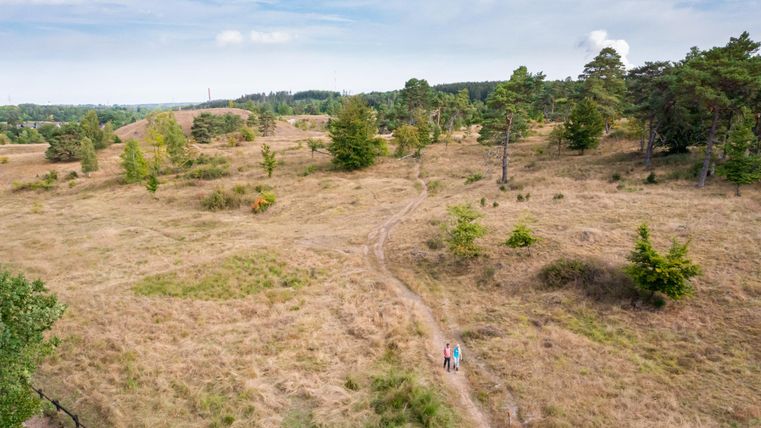
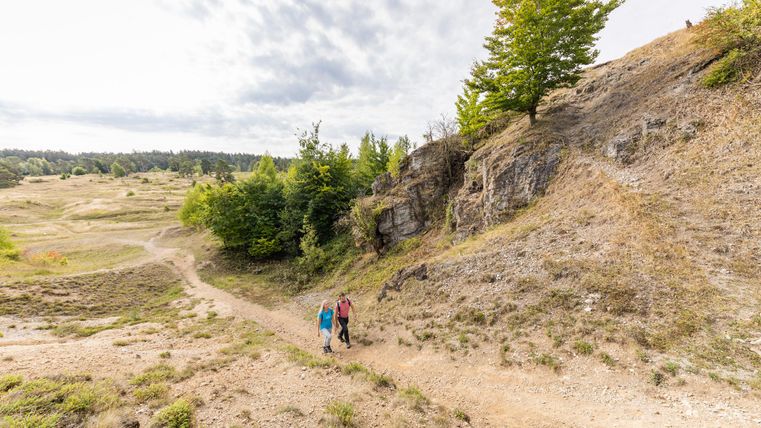
Around 380 million years ago, coral reefs and limestone deposits were formed here, later interspersed with zinc and lead ores at fracture points. It was precisely these rich mineral resources that made the Schlangenberg a center of ore mining until the 19th century. And even today, tunnels, potholes and slag heaps are reminders of this time.
When ore mining ended, nature began to reclaim the area. Since then, plants that can cope with heavy metals, the so-called galmeiflora, have grown on the metal-containing soils.
Its best-known representative is the bright yellow galmei violet, which blooms between April and May. It stands for the astonishing adaptability of life - and for the transformation from a sea to a barren mining area and finally to a natural habitat.
Around 380 million years ago, coral reefs and limestone deposits were formed here, later interspersed with zinc and lead ores at fracture points. It was precisely these rich mineral resources that made the Schlangenberg a center of ore mining until the 19th century. And even today, tunnels, potholes and slag heaps are reminders of this time.
When ore mining ended, nature began to reclaim the area. Since then, plants that can cope with heavy metals, the so-called galmeiflora, have grown on the metal-containing soils.
Its best-known representative is the bright yellow galmei violet, which blooms between April and May. It stands for the astonishing adaptability of life - and for the transformation from a sea to a barren mining area and finally to a natural habitat.
Impressions

Contact
Geoweg
52222 Stolberg