Copyright: Fotos: Dominik Ketz / Stolberg-Touristik
Altstadtkirchen Hahn, Schwan, Engel
Stolberg
In retrospect, the influx of Protestants and Lutherans in the 16th and 17th centuries created a population structure in Stolberg that is reminiscent of the modern slang term "multi-culturalism". It is certain that the Protestant copper masters and the Lutheran workers were welcome by the Catholic territorial lords (Jülich feudal lords and abbots of Kornelimünster).
However, it remains unclear whether this was due to a tolerant attitude or whether fiscal considerations were paramount.
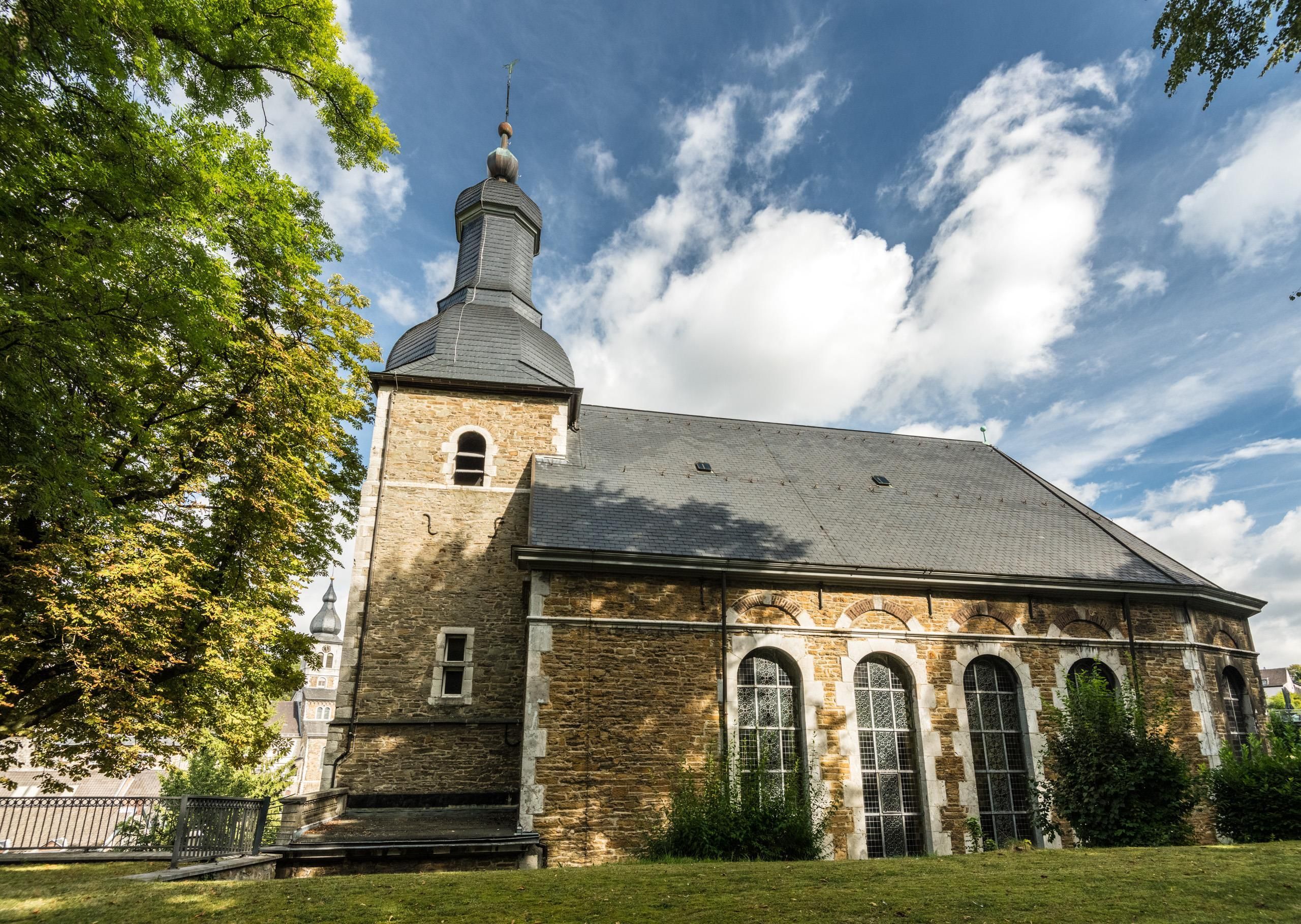
Be that as it may, in the 17th century, the Catholic St. Lucia Church was joined by the Lutheran Vogelsang Church and the Protestant Finkenberg Church, which rise up from the lowlands of the old town in a cozy "trinity" (also geographically).
Alluding to the weather vanes of these three old town churches (rooster, swan, angel), the Catholic priest Roland Ritzefeld coined the following saying around 1850:
D'r katkollische Hahn,
D'r evangällische Schwan
Un d'r protestantische Engel
Driehne all an eene Schwängel.
(All turn a crank)
Although meant humorously, this quatrain reveals a remarkable tolerance for the time.
Our three old town churches are not only a reflection of historical developments, they also have - each in their own right - special features that are worth discovering.
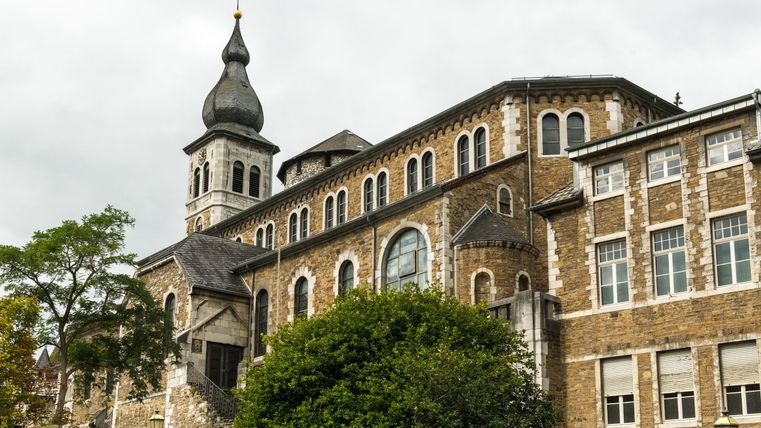
Church of St. Lucia (Hahn)
Today's St. Lucia Church emerged from the former castle chapel. The first image dates back to 1544.
In 1650, a new high altar was consecrated in the castle chapel, which was dedicated to the "Holy Trinity". In 1716, two side altars were added, the left one dedicated to the Mother of God and the right one to St. Lucy. St. Lucy has been the patron saint since the beginning of the 19th century.
The rooster crowning the end of the balustrade wall of the staircase, which symbolically calls the faithful to worship, and the reliefs in the entrance area can be confidently assigned to the Art Nouveau style. Inside, the tower pillars are a reminder of the old structure.
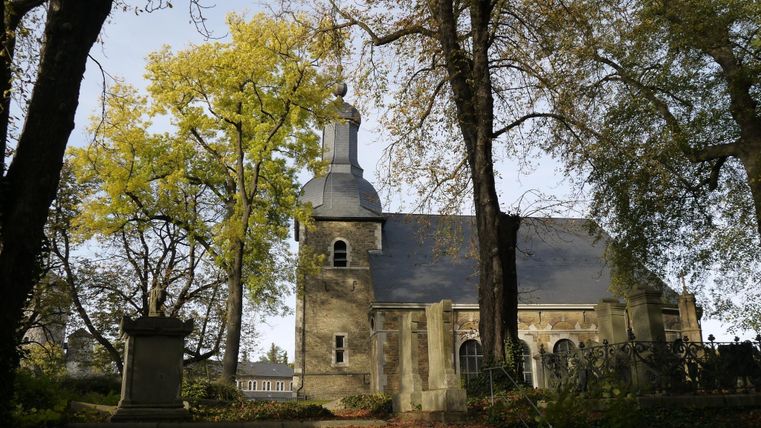
Vogelsangkirche (Schwan)
In 1647, the Lutheran congregation, which at the time held its services in a storeroom of a house in the Enkerei, bought a plot of land which they called the "Kreuzhof".
After purchasing the property, the pastor of the congregation died suddenly and unexpectedly. In 1647, towards the end of the Thirty Years' War, the new pastor Erasmus Blum agreed to take on the risk of a collection trip to raise the funds for a church building and traveled to numerous towns and principalities in the German Empire. This is how the church came into being, which was begun in 1647 and consecrated at Christmas 1650. The sacred building and the priest's residence were under one roof. Later, the house also served as a school building and sexton's residence. Above the church entrance is the inscription: "Lord, let your eyes be open on this house, night and day on the place of which you have said: my name shall be there." (1 Kings 8:29-.)
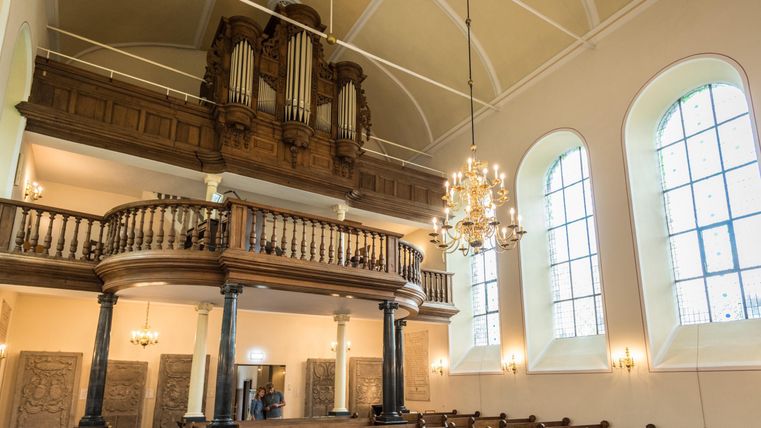
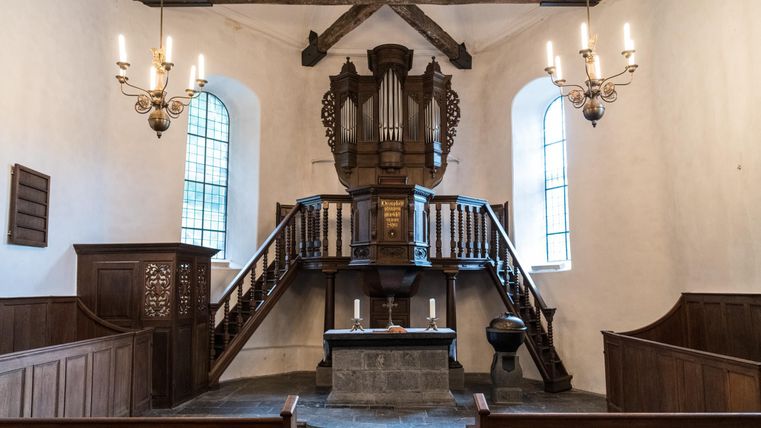
On the roof we see a swan as a weather vane. The swan symbolizes the union of the soul of a believer with the spirit of God after death. The cemetery of the Lutheran parish was laid out in 1686. Inside the church, relief gravestone plaques have been preserved which refer to burials in the church. The focal point and eye-catcher is the pulpit above the altar. On the right is the baptismal font, on the left behind the screen is the preacher's preparation chair.
The Finkenberg Church (Engel)
The furnishings of the Protestant church are traditionally simple. Nothing was to disturb the devotion of the Reformed. Pictures and sculptures were undesirable. However, this did not mean that precious objects were dispensed with.
The preacher's chair, which is supported by a pelican, forms the focal point of the church. It is considered a symbol of the sacrificial Christ, who fed his young with his own blood. The sacred objects from the 18th century are rarities.
The Finkenberg church had predecessor buildings. It began with a small chapel dating back to 1617. A new church was built in 1671, which in turn had to make way for a successor building in 1725. A stone tower was erected in 1686, which is still crowned today by the weather vane in the shape of an angel with a trombone.
The building from the first half of the 18th century is the work of master builder Tillmann Roland.
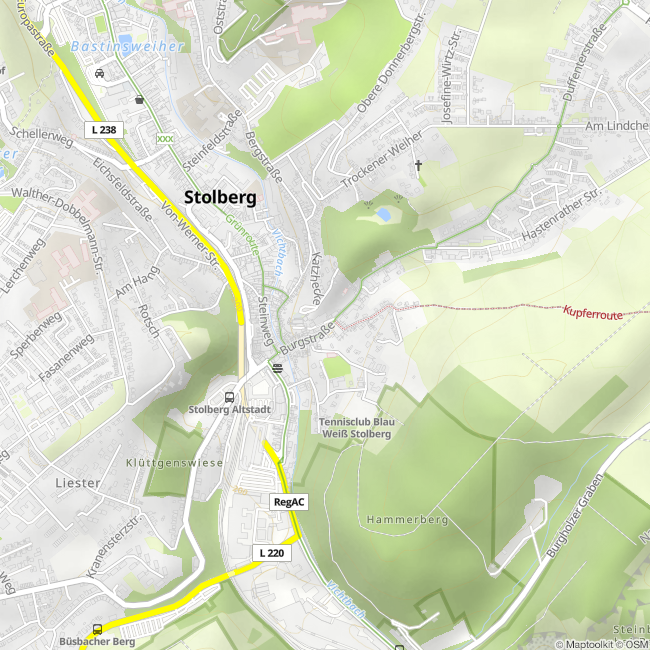
Discover the three churches and many other sights on a tour of the old town on Kupferader Stolberg. The "Die Kupferader" flyer takes you through the romantic alleyways of Stolberg's old town to the most important buildings and places!
Impressions
Contact
Altstadtkirchen Hahn, Schwan, Engel
Vogelsangstraße
52222 Stolberg